Pokies Parlour Casino Australia: Venue Guide
 Available in US
An overview of gaming machines, payments, venue operations, promotions, reviews, and the Australian position on online play.
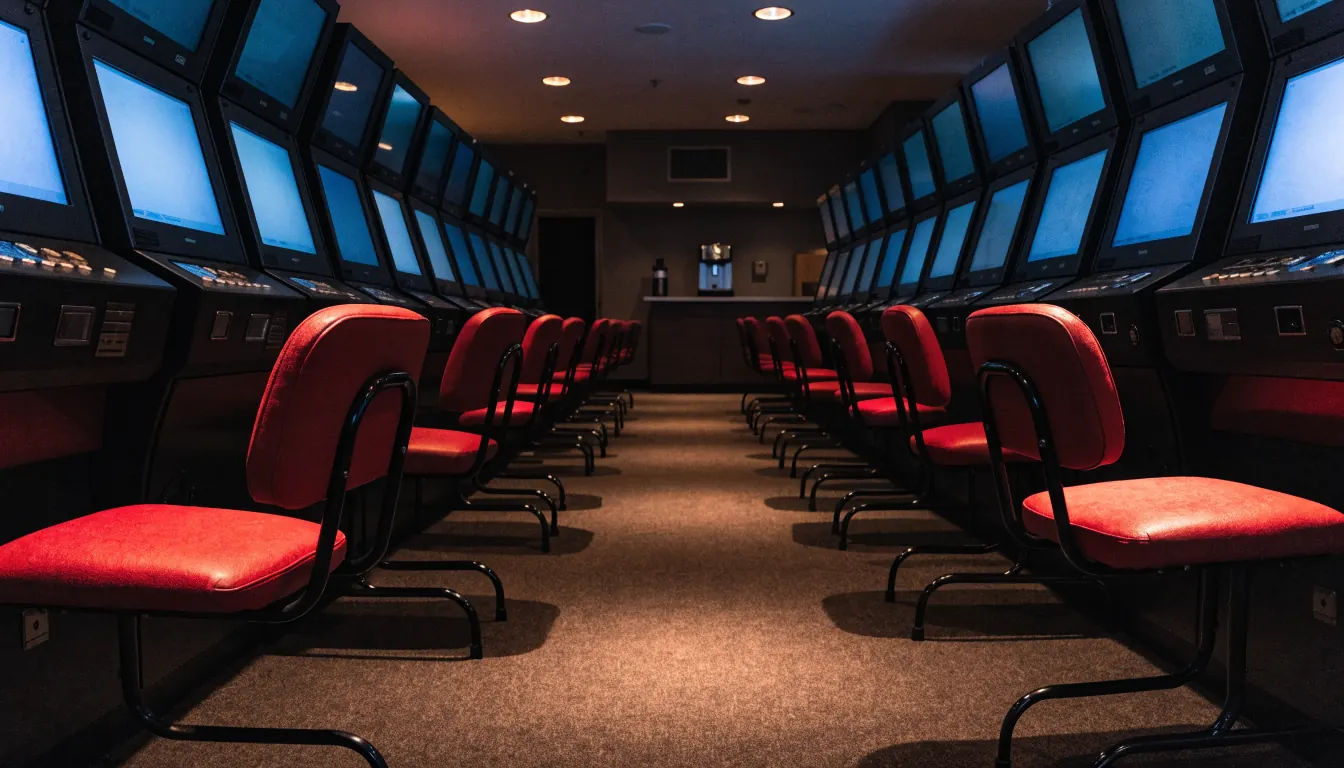
Table of Contents
- Inside a Pokies Parlour: Machines, Payments, and the Venue Model
- Where Parlour-Style Gaming Fits in Australia’s Entertainment Network
- Australian Rules That Shape Every Pokies Venue
- The Machine Rules Behind the Session
- Bonuses, Free Play, and the Reality of Parlour Promotions
- Reading Pokies Parlour Reviews Without Treating Marketing as Evidence
- VIP Treatment, Loyalty Systems, and Compliance Trade-Offs
- Playing Pokies Parlour Games Online: What the Australian Position Means
- No-Deposit Claims: What the Phrase Actually Covers
Inside a Pokies Parlour: Machines, Payments, and the Venue Model
A pokies parlour is a business establishment built around electronic gaming machines. The machines are not a side feature placed beside a bar or restaurant; they form the operating centre of the venue and the main source of revenue. From the customer’s side, the model is straightforward: enter the physical venue, select a machine, fund a playing balance, and use that balance for games of chance played with real money.
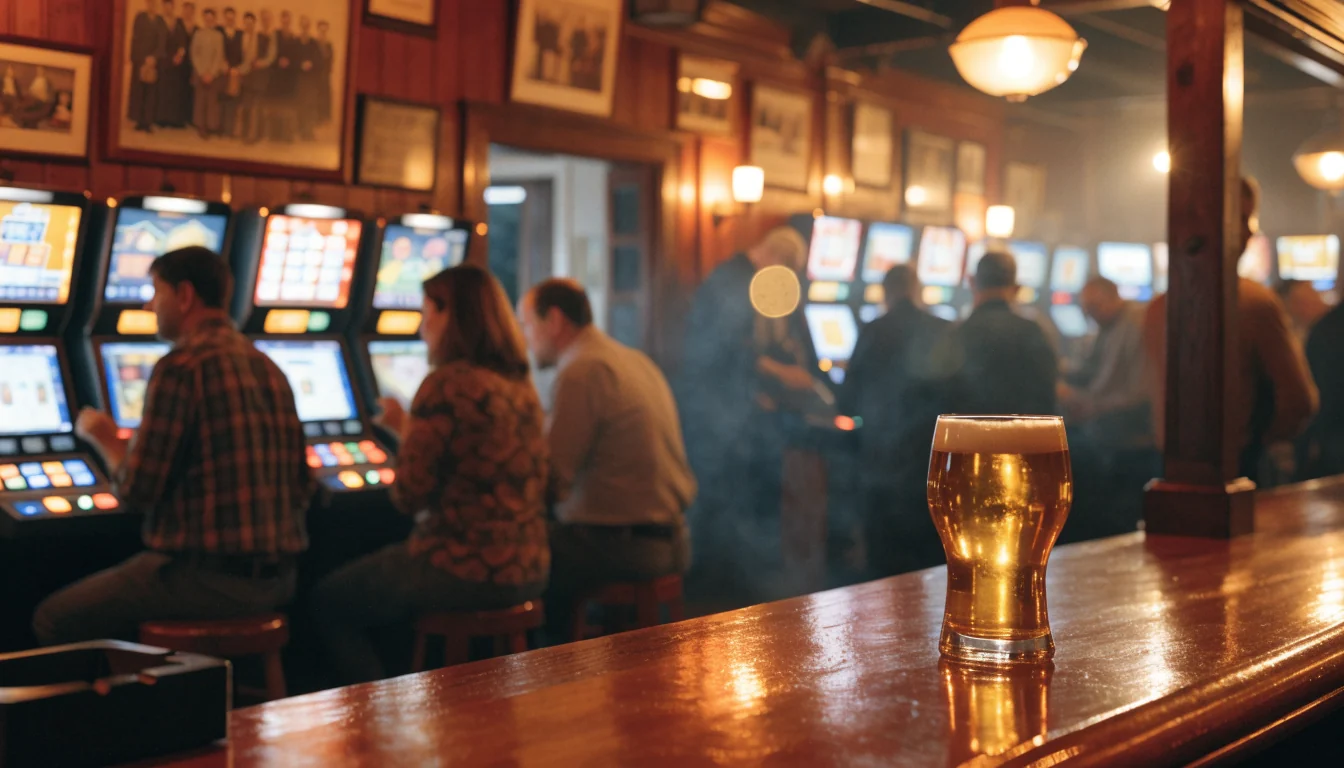
The room is organised around the floor rather than around a single table or dealer. Rows of cabinets face the same direction, with enough space for staff to move between positions and for patrons to sit at individual terminals. The layout allows many sessions to run at once. A customer can remain at one machine, change to another nearby, or compare several screens before deciding where to play.
What sits on the gaming floor
The central equipment is the pokie machine: a digital terminal containing the game software, display, controls, and a method for accepting or recording funds. A parlour may offer a large array of machines, with many establishments carrying hundreds of different pokie machines. The selection is not limited to one visual style. It can include traditional reel-style games alongside video games with modern graphics, themes, and storylines.
This page brings together operators relevant to the pokies parlour casino Australia 2026 topic, so you can quickly review their stated licensing, bonuses, deposit requirements and payment details. Use the listed facts as a starting point when assessing which casino profiles deserve a closer look.
License: Curacao eGaming Licence · Min. deposit: A$10 Royal Reels operates under a Curacao eGaming Licence and lists a minimum deposit of A$10. It is a straightforward option for readers focused on licensing and a low stated entry deposit.
License: Curacao eGaming Licence · Min. deposit: A$10 Fair Go Casino holds a Curacao eGaming Licence and has a minimum deposit of A$10. Its profile is notable for combining this stated licence with a modest entry requirement.
License: Curacao Gaming Control Board OGL/2023/176/0095 (Hollycorn N.V.) · Bonus: up to A$11,000 + 300 free spins (code NEO100) Neospin lists a Curacao Gaming Control Board OGL/2023/176/0095 licence issued to Hollycorn N.V. Its NEO100 offer provides up to A$11,000 plus 300 free spins.
Bonus: 240% up to A$4,100 + 300 free spins WinShark stands out for a 240% bonus up to A$4,100, together with 300 free spins. The available information highlights its promotional offer.
License: Curacao Gaming Control Board · Bonus: up to A$5,000 + 400 free spins JustCasino lists a Curacao Gaming Control Board licence and offers up to A$5,000 plus 400 free spins. Its profile is therefore centred on a named licence and a substantial promotional package.
License: Curacao – Antillephone N.V. (Versus Odds B.V.) · Bonus: up to EUR 2,000 across 5 deposits + 200 free spins · Min. deposit: EUR 20 Thor Casino operates under a Curacao licence held through Antillephone N.V. for Versus Odds B.V. Its offer reaches EUR 2,000 across five deposits with 200 free spins, and the minimum deposit is EUR 20.
License: Curacao eGaming (Roby Games Ltd) · Bonus: 100% up to A$750 + 200 free spins Roby Casino lists a Curacao eGaming licence for Roby Games Ltd. Its promotion includes 100% up to A$750 plus 200 free spins.
License: international iGaming licence – jurisdiction not named in the source · Bonus: 100% up to A$1,000 + 100 free spins, 35x wagering · Payout speed: PayID 1-24 hours · Min. deposit: A$30 (PayID from A$10) House of Pokies states that it has an international iGaming licence, although the source does not name the jurisdiction. It offers 100% up to A$1,000 plus 100 free spins with 35x wagering, while PayID payouts are stated as taking 1–24 hours; the minimum deposit is A$30, or A$10 via PayID.
License: Curacao · Bonus: 100% up to A$500 + 200 free spins, 10x wagering · Payout speed: crypto 30-60 minutes, fiat 1-5 days · Min. deposit: A$10 Wild Tokyo lists a Curacao licence and offers 100% up to A$500 plus 200 free spins with 10x wagering. Its stated payout times are 30–60 minutes for crypto and 1–5 days for fiat, with a minimum deposit of A$10.
Bonus: up to A$6,600 + up to 250 free spins across 4 deposits DragonSlots Casino offers up to A$6,600 plus up to 250 free spins across four deposits. The available information makes its multi-deposit promotion the main point of interest.
That variety changes the feel of the room. Classic machines present a familiar format, with symbols arranged around reels and a compact set of controls. More elaborate video games place greater emphasis on animation, sound, feature sequences, and narrative presentation. Both remain electronic games of chance. A more detailed screen does not turn the session into a skill-based activity.
Machines also differ in their available stakes and reward systems. The important distinction is practical: the chosen terminal determines which game is being played, what controls are available, and how the playing balance is applied. The floor therefore functions less like one product and more like a collection of separate electronic games operating under the same venue.
The cabinet is only the visible part of the system. Behind the screen are software, payment records, machine settings, and monitoring processes that allow the venue to account for play. When a terminal stops responding, shows an error, or fails to record a transaction correctly, the problem is operational rather than cosmetic. Staff support and technical maintenance keep the machine available and protect the continuity of the session.
How funding works
Customers fund play through a digital account or balance associated with the machine or the venue’s payment system. The essential sequence is deposit first, play second. Money is converted into an available playing balance, and that balance is then used to activate games at the selected terminal.
The physical process can involve inserting coins or notes, using a card-based payment method, or connecting a digital wallet through the venue’s system. Mobile payment can also be integrated through barcode scanning. The exact interface depends on the equipment installed, but the operating principle remains the same: funds must be recorded before the machine can use them for play.
This arrangement gives the floor a controlled transaction structure. The machine needs to recognise the credited balance, register each play, and update the account after the game. A win or remaining balance is handled through the same system rather than through a staff member manually settling every spin. Staff intervention becomes necessary when a payment is rejected, a ticket or account record is unclear, or a machine fault interrupts the transaction.
The payment screen matters as much as the physical slot. A customer may see buttons for loading funds, selecting a stake, starting the game, and collecting an available balance. That interface is the practical link between the venue’s accounting system and the machine session. It also explains why a machine can remain unavailable even when its screen and cabinet appear intact: the issue may sit in the payment or account connection.
The role of staff and maintenance
A functioning pokies parlour depends on more than a full floor. Regular maintenance, software updates, and troubleshooting are part of the operating model. Technicians and venue staff deal with faults, screen problems, payment interruptions, and other issues that can prevent normal use. Updates help keep the game system working as intended, while routine checks reduce disruption across the floor.
From behind the counter, the distinction between a machine problem and a customer-account problem is important. A cabinet may display a game correctly while failing to accept a payment. Conversely, a balance may be valid while the game itself needs attention. Staff must identify which part of the chain has failed before restoring play or moving the customer to another terminal.
This is why technical support is not an optional extra added for appearance. The machines are the venue’s core commercial equipment. If terminals cannot accept funds, run games, or record outcomes reliably, the parlour loses the activity that sustains it.
Venue Model Physical establishment centred on electronic gaming machines
Primary Revenue Electronic gaming machines (pokies)
Funding Method Digital accounts, cards, or cash-to-balance systems
Regulatory Context State and territory-specific rules
What the model does not mean
The phrase “pokies parlour casino” can make the venue sound like an online product or a conventional land-based casino with table games. The physical model is narrower. Its defining feature is a room centred on electronic gaming machines, with customers seated at individual terminals and using recorded funds to play.
The same distinction applies to “free” language. A machine is not free to play merely because its software, graphics, or demonstration mode can be viewed without funding an account. Real-money play requires a credited balance. Promotional wording belongs to a separate question from the basic operation of the floor.
Likewise, online casino searches describe a different format. A physical pokies parlour is built around machines installed in a venue, payment handling at that venue, and staff responsible for keeping the equipment operating. It is not simply a website reproduced on a larger screen.
The operating model is therefore easy to describe but highly system-dependent: a dedicated physical floor, a broad choice of electronic games, digital funding, individual machine sessions, and continuous technical support. The attraction is visible on the screen. The business runs through everything behind it.
Where Parlour-Style Gaming Fits in Australia’s Entertainment Network
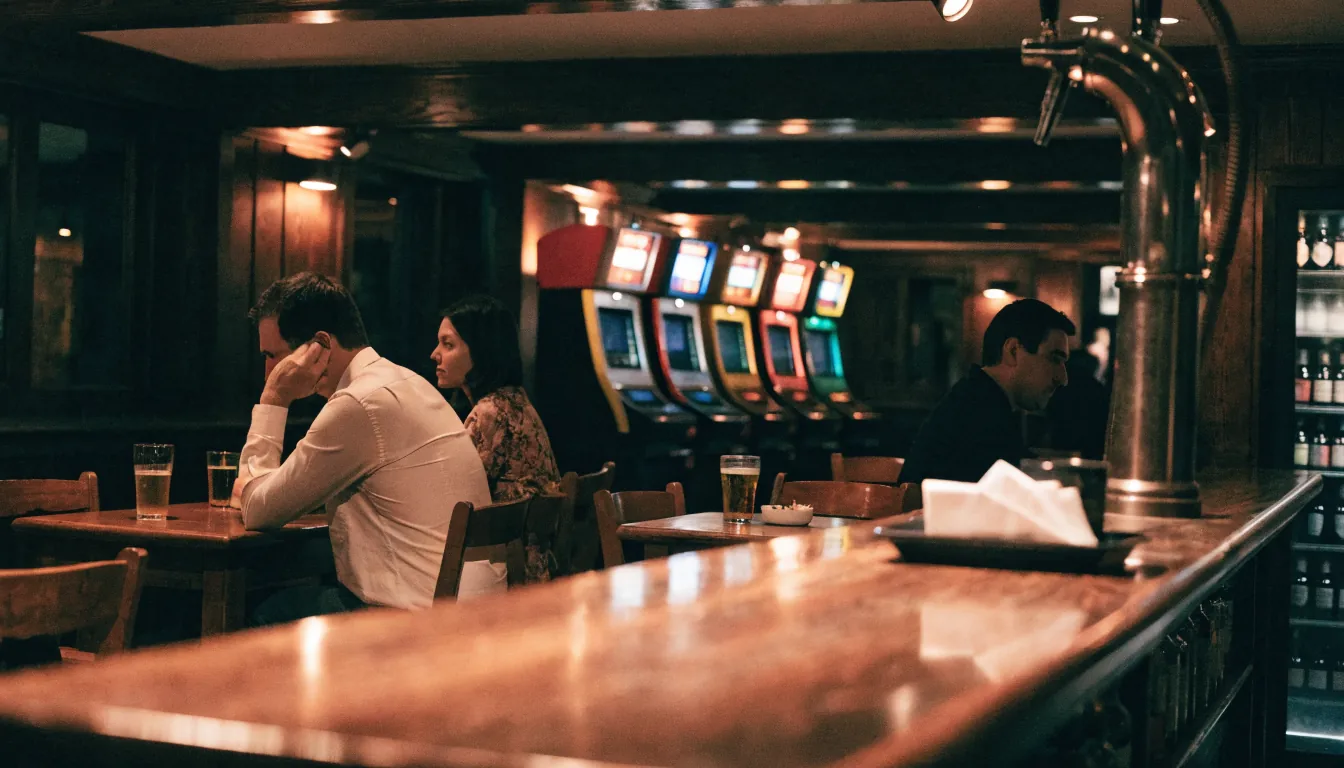
A pokies parlour sits in a particular part of Australia’s entertainment network. It is not simply a land-based casino under another name, and it is not necessarily a stand-alone building devoted only to gambling. The term describes a venue model centred on pokie machines, often positioned alongside food, drinks, hospitality, or community activity.
That distinction matters. A search for a “parlour casino” may suggest a conventional casino floor, but the local Australian setting is broader and more attached to everyday venues. The commercial identity comes from the gaming offering; the physical setting may be a hotel, club, restaurant, or another established hospitality site.
A long-established local format
Pokies parlours have been a staple of local entertainment scenes in Australia and New Zealand since the 1990s. Their presence developed alongside venues that already served a neighbourhood or travelling public. In that setting, electronic gaming became part of a wider outing rather than an isolated destination experience.
The history is therefore less about spectacular casino architecture and more about integration. A person might visit a hotel for a meal, meet friends at a club, stop during a journey, or use a hospitality venue as a local social point. The gaming area forms one component of that visit. That is why the language of a “pokie parlour” can describe a familiar part of the entertainment landscape even when the site does not look like a dedicated casino.
From behind the counter, the distinction was obvious. The gaming floor helped define the venue, but the venue’s wider business shaped how the floor functioned commercially. Food service, drinks, local events, and regular trade gave the site reasons to exist beyond a single gaming session.
Not a separate island.
Where these venues are found
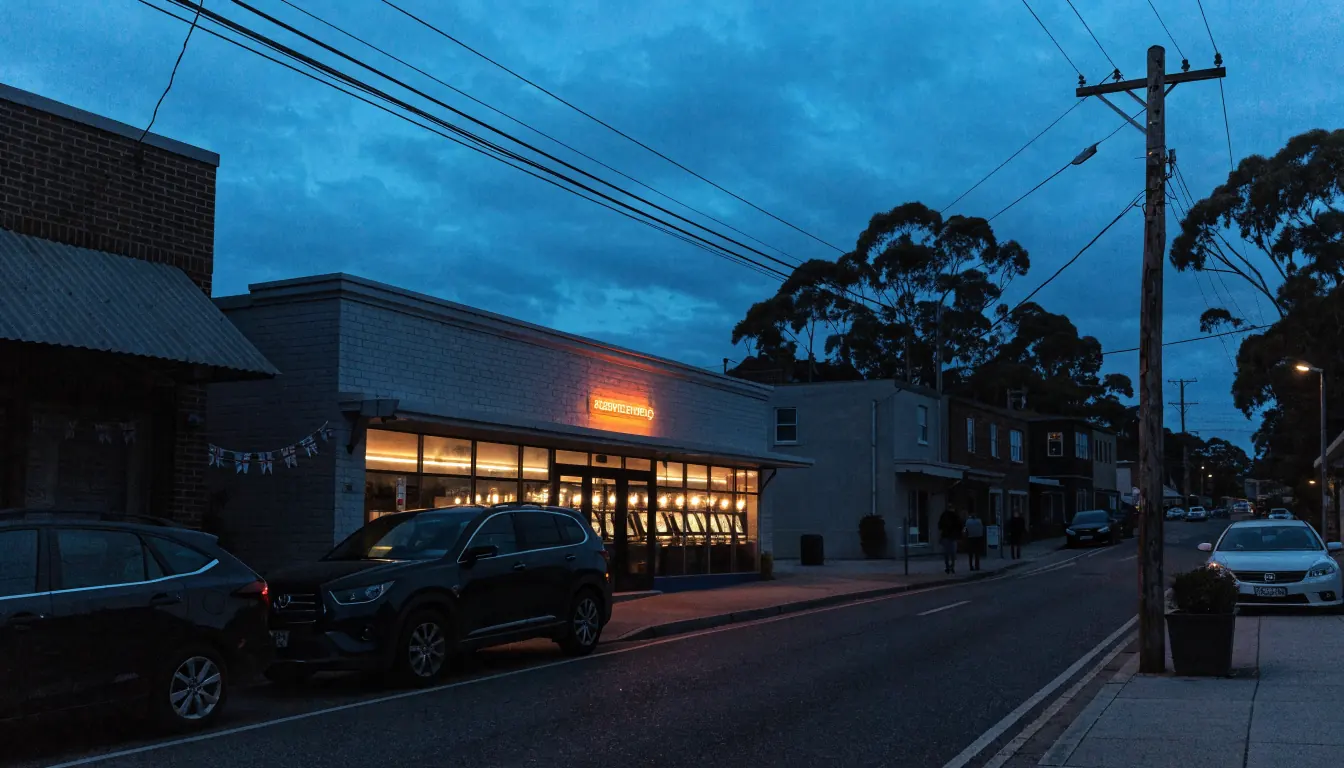
The geographical pattern follows movement and population. Pokies parlours can be found in urban areas, along highways, or near major intersections. Each setting gives the format a slightly different commercial role.
In urban areas, the venue may serve a local catchment within a busy entertainment network. Nearby hospitality businesses, transport routes, workplaces, and residential districts create regular foot traffic. The parlour-style offer is then part of a broader cluster of places used for dining, socialising, and evening activity.
Highway locations work differently. They are connected to passing traffic and planned stops rather than only to a fixed neighbourhood. A venue in that position may combine hospitality with a gaming area as part of a larger rest or service destination. The important point is not that every highway venue has the same layout, but that location changes the audience and the reason for visiting.
Serves local catchments within busy entertainment networks and residential districts.
Connected to passing traffic and planned stops for travelling public.
High visibility locations connecting surrounding districts and local residents.
Major intersections create another form of visibility. They make a venue easy to locate and connect it to several surrounding districts. This can give a pokies parlour a role between local entertainment and through-traffic: familiar to nearby residents, yet accessible to people moving across the area.
Location is part of the product.
The attached-venue model
Pokie parlours are often attached to bars, hotels, restaurants, or community clubs. This attachment is commercially significant because it places gaming inside an existing hospitality relationship.
A bar may provide the social setting and refreshments. A hotel can combine accommodation or dining with entertainment facilities. A restaurant may make gaming one element of a wider visit. A community club can connect the gaming area with membership, local events, and other forms of organised activity. These are different operating environments, even where the machine-based attraction is similar.
The attached model also explains why “pokie parlour casino” is an imprecise phrase in Australian usage. It may be used by people trying to describe a casino-like gaming area, but the actual venue can be a club or hotel rather than a casino in the conventional sense. The surrounding business affects the atmosphere, opening pattern, customer mix, and place in the local economy.
This is where promotional descriptions often flatten the picture. A phrase such as “casino experience” may focus attention on the machines while leaving out the venue relationship that brings customers through the door. In practice, the commercial setting is visible in the whole site: the entrance, dining area, bar, club facilities, and the position of the gaming floor within them.
The attachment is the context.
Australia and New Zealand
Pokies parlours are commonly found in both Australia and New Zealand, but the shared vocabulary should not be mistaken for one identical market. The format belongs to a wider Australasian entertainment tradition, while each country has its own legal and commercial environment.
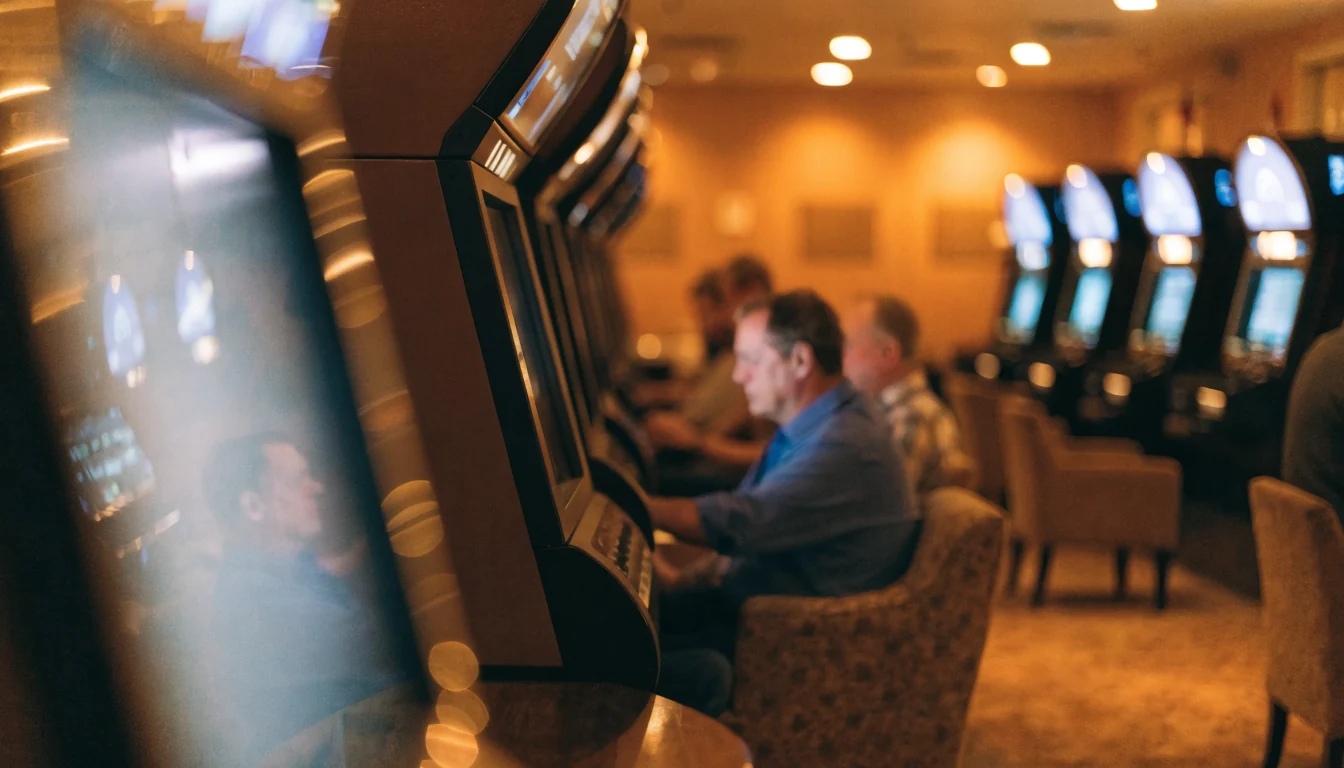
For this article, the Australian context is the relevant one. Australian venues sit within state and territory arrangements and local hospitality patterns. The same broad label can therefore describe sites with different surroundings and different commercial identities. A suburban club is not interchangeable with a highway hotel, even if both contain pokie machines.
That variation is useful when assessing what a venue represents. “Pokie parlour” identifies the central attraction, not a universal building type. It says less about whether the site is urban or regional, attached to a bar or community club, or used mainly by local regulars or passing customers. Those details come from the venue’s position in the entertainment network.
Local entertainment rather than isolated gambling
The local role of a pokies parlour is easiest to understand through its connections. These venues can sit between hospitality, social activity, travel infrastructure, and community life. They may attract customers because of the gaming area, but their place in the market is often reinforced by everything around it.
That is also why a description based only on machine choice misses part of the experience. Two venues with a similar gaming offer may feel commercially different because one is integrated into a community club and another is positioned beside a major route. The surrounding business determines whether the site functions as a neighbourhood meeting place, a hospitality stop, or part of a larger entertainment precinct.
A pokie parlour is therefore best viewed as a venue category within Australia’s existing network, not as a universal synonym for a land-based casino. Its history reaches back to the 1990s, its locations range from cities to highways and major intersections, and its physical identity is frequently tied to bars, hotels, restaurants, or community clubs.
The machines draw attention. The venue gives them a place.

Australian Rules That Shape Every Pokies Venue
A pokies parlour does not operate under one national venue rulebook. Gaming machine regulation is mainly controlled by individual Australian states and territories, with local laws determining how gaming services may be provided. That division matters because a rule applying to a club or hotel in one jurisdiction cannot automatically be treated as a national standard.
The practical result is a layered compliance model. The venue must follow the relevant state or territory requirements, while broader obligations can also apply to gambling businesses. The legal framework is therefore more than a licence displayed behind the counter. It covers who may enter the gaming area, what information must be visible, how risk controls are implemented, and when machines may operate.
Access and information
Pokies play is restricted to adults aged 18 and over. Age access is a basic operating condition, not a promotional feature. Venues must also clearly display the Return to Player (RTP) and game rules. Those details give the session a defined information baseline: the machine’s rules and stated return information should be available before play, rather than hidden in promotional wording.
Mandatory harm-minimisation features are also part of venue operation. A compliant setting must include a self-exclusion program and gambling support information. These measures sit alongside the gaming floor; they are not optional extras reserved for a VIP parlour casino or a loyalty area.
Hours and accountability
Operating hours are jurisdiction-specific. A regulatory overview identifies ACT clubs and hotels as having a five-hour gambling break and not operating around the clock. That detail should be treated as an ACT rule, not copied across Australia. Operating outside permitted hours can lead to substantial fines and put the venue’s licence at risk.
Compliance duties also extend beyond the machines. Venues with more than 15 pokies must appoint a compliance officer and maintain formal AML/CTF programs. Cash transactions exceeding AUD 10,000 must be reported to AUSTRAC. The public-facing floor may look simple; the obligations behind it are not.

The Machine Rules Behind the Session
The machine is where abstract regulation becomes visible. A player does not encounter a statute first; the limits appear as selectable denominations, displayed game information, available payment options, and the amount that can be committed to one play. In a land-based venue, the session is shaped by the machine’s configuration before any promotional wording enters the picture.
Game formats and machine settings
Pokie machines are not limited to one visual or mechanical format. Electronic gaming machines can imitate classic slots, poker, or keno, while other titles use distinct themes and variations. A parlour may therefore contain simple reel-style games beside more elaborate video products with modern graphics and several feature stages.
That variety changes the practical feel of the floor. A classic format may present a compact set of controls and a straightforward stake selection. A themed video game may place more information on screen, including paylines, feature conditions, symbols, and selectable denominations. The important point is that the appearance of the game does not remove its underlying structure: the machine accepts a stake, runs a chance-based result, and records the outcome electronically.
Stakes can range from low-denomination play to substantial high-stakes settings, with the available range differing between establishments and machines. The denomination is not the same thing as the total amount committed to a spin. A machine can offer several ways to configure a play, so the selected lines, credits, or feature settings matter as much as the displayed value of one credit.
That is why the game information deserves attention before the session starts. The rules explain how a result is generated and how a winning combination or feature is treated. The display should also make the machine’s Return to Player (RTP) information available. RTP is a long-run mathematical measure, not a promise attached to the next spin. It does not convert an individual session into a predictable return.
Understanding RTP Return to Player (RTP) is a long-run mathematical measure of a game’s return percentage. It is not a guarantee of results for an individual session and does not turn a session into a predictable outcome.
Payment at the machine
The physical process is direct. Customers sit at the machine, insert coins or notes, or use a card-based method, then select the game and stake. Other payment routes can include credit cards, digital wallets connected with venue applications, and mobile payments integrated through barcode scanning.
Each method changes the visibility of the transaction. Cash is physically placed into the machine and produces a balance on the screen. A card, wallet, or mobile method moves the same funding decision into an electronic workflow. The balance may feel less tangible, but it remains money committed to chance-based play. A digital display is not a bonus balance merely because it is stored electronically.
This distinction matters when promotional language uses expressions such as “free spins” or a “free chip”. Those phrases describe an offer only when a venue has actually defined the conditions behind them. They do not alter the machine’s stake settings, RTP, or game rules. A free-play label also should not be read as evidence that a physical pokies parlour provides a cash-equivalent credit, an online casino feature, or a route to real-money play without funding.
From behind the counter, the practical question was always simpler: what balance is available, what stake has been selected, and what does the machine display before the button is pressed? Marketing language sits outside that sequence.
Numbers first. Claims later.
Limits that can be seen
Machine limits affect the session in two ways. First, a venue or jurisdiction may restrict the maximum stake available for a play. Second, the machine’s own configuration may offer a narrower range than the legal ceiling. A permitted maximum is therefore not an instruction to use it; it is a boundary within which the product may operate.
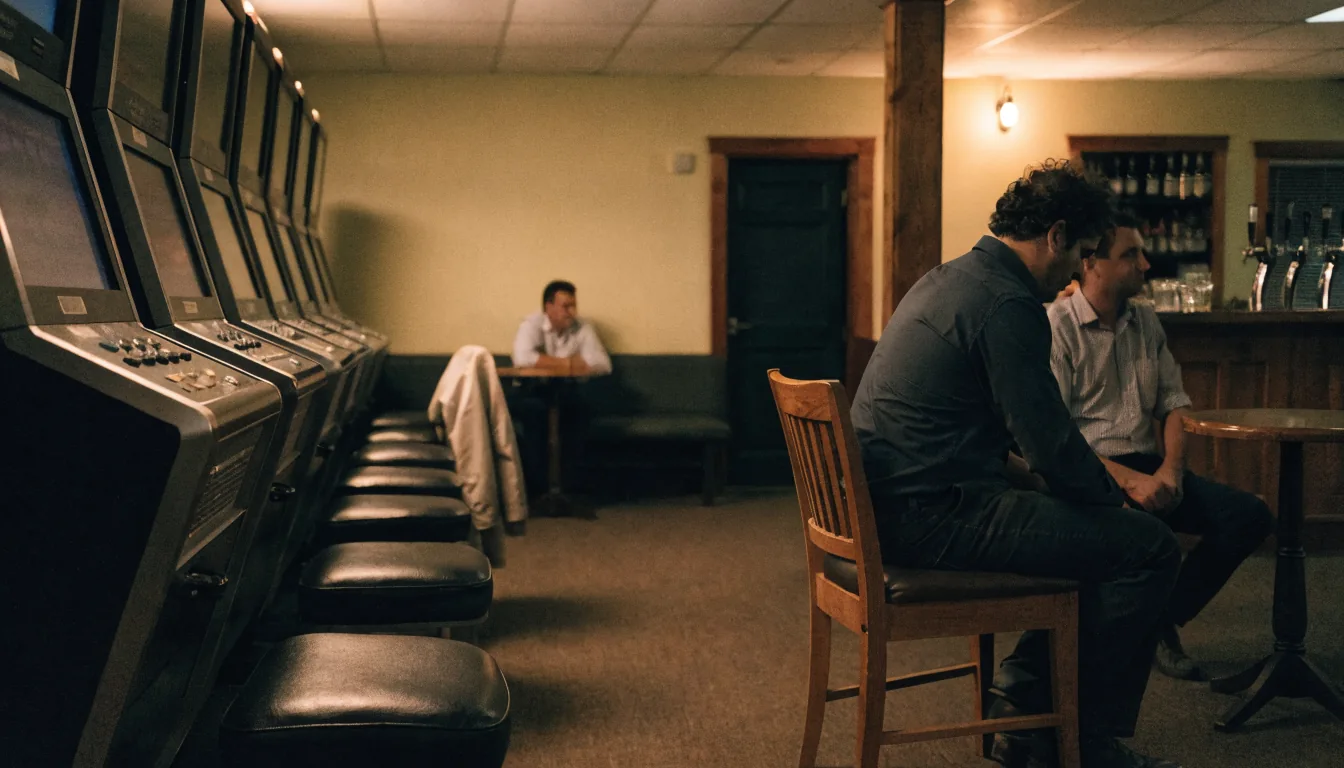
The Australian position is not uniform across all venues. Gaming machine rules are controlled mainly by individual states and territories, so a limit described for one jurisdiction should not be presented as a national setting. A reported ACT rule places the maximum gaming-machine bet at $10 per spin. That figure should be attributed to a specialist industry overview, rather than treated as a universal Australian machine rule.
The same separation applies to RTP. The reported ACT minimum is 87%, but RTP remains a statistical measure tied to the approved game configuration. It says nothing about the order of results in one sitting and does not guarantee that a particular machine, session, or player will return that percentage.
A machine can also impose practical limits through its interface: available denominations, stake combinations, feature selections, and the balance required to continue. These settings determine what can actually be selected at the seat. The result is a session governed by several layers at once—jurisdictional boundaries, approved game information, machine configuration, and the funds placed into play.
That is the part promotional copy tends to compress. “Play free” may describe a restricted demonstration or a venue-defined reward; it does not erase the difference between entertainment mode and real-money play. “Free spins” may describe a condition attached to a particular offer; it does not change the probability model. And a “free chip” is not a substitute for reading the displayed rules.
The screen tells the operational truth. The wording around it may not.
Bonuses, Free Play, and the Reality of Parlour Promotions
The word “bonus” creates a problem in a physical pokie venue. On an online casino page, it can mean a sign-up payment, free spins, free chips, a matched deposit, or a no-deposit offer. At a parlour, the same word may refer to a loyalty balance, a venue privilege, or a machine feature. Those are not interchangeable products, and treating them as if they were makes the commercial arrangement look clearer than it is.
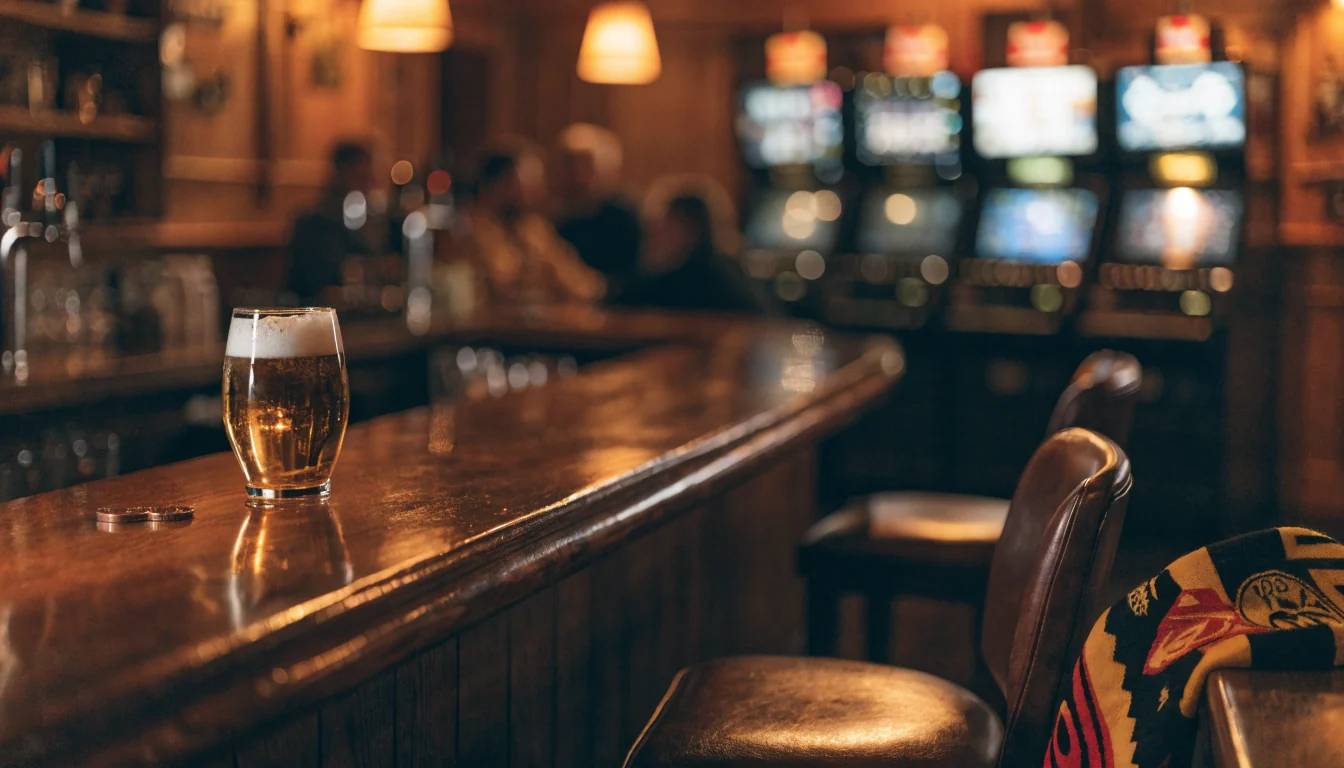
From behind the counter, the distinction was practical. A customer asking about a “pokies parlour sign-up bonus” was often asking what would be credited to a venue account, whether a membership card carried points, or whether a promotion applied to a particular machine. That is different from opening an online casino account and receiving gambling credit. The first belongs to a physical venue’s customer relationship. The second belongs to an online promotional model that is not lawfully available to Australian residents through a domestically licensed casino service.
What a physical venue can call a promotion
A parlour-linked promotion may be connected to a membership record, points programme, or loyalty reward. A specialist industry review describes some establishments as offering points that can be exchanged for in-game virtual items or non-monetary perks, including higher jackpots. That is a source-specific description, not a market-wide promise. It should not be converted into a claim that every pokie parlour offers points, prize upgrades, or free play.
The important detail is what the reward actually does. A loyalty arrangement may recognise visits or activity and attach a benefit to the venue relationship. It may provide a non-cash item, a venue privilege, or a feature connected with play. None of those labels automatically means that the customer receives withdrawable money. “Reward” is not the same as “cash bonus”.
That difference is easy to miss in advertising language. “Member benefit” can sound like extra playing funds. “Complimentary play” can sound like a no-deposit bonus. “Jackpot access” can sound like a guaranteed return. The wording may be attractive while leaving the central question unanswered: what is credited, where can it be used, and can it be converted into cash?
A responsible description keeps those questions separate. It identifies the reward as venue-based, states whether the available facts describe it as monetary or non-monetary, and avoids inventing conditions that have not been published. There is no sound basis for claiming a standard Australian pokie parlour bonus, a universal sign-up amount, or a fixed reward schedule.
Free play is not automatically free money
“Free play” is another expression that needs handling carefully. In a physical venue, it may describe a promotional mechanic attached to a membership or a particular activity. The phrase alone does not establish a cash entitlement, a guaranteed win, or an unrestricted balance. It also does not show that the reward can be used across venues.
The operating environment matters. Pokie machines are real-money electronic games, and the machine’s rules, stake settings, Return to Player information, and harm-minimisation controls remain relevant when a promotion is mentioned. A promotional label does not suspend those conditions. It changes how the customer may receive or use a venue benefit; it does not turn chance into a predictable outcome.
This is why a request for a “pokies parlour no deposit bonus” should not be answered with a made-up offer. A physical venue may have a loyalty arrangement, but the available facts do not establish a standard no-deposit credit for Australian parlours. Nor do they establish that a membership produces free spins, free chips, or a cashable balance.
The safer wording is narrower: a venue may advertise a local loyalty benefit, subject to its stated terms and the applicable rules. That describes a possible mechanism without presenting it as a guaranteed feature of the market.
Why online bonus language causes confusion
Online casino promotions are built around account acquisition. A customer creates an account, deposits funds, and may be shown an incentive designed to encourage registration or further play. Search phrases such as “pokies parlour casino no deposit bonus” often borrow that language and attach it to a land-based setting.
Legal Boundary Online casino games, including digital pokies, are prohibited interactive gambling services for Australian customers under the Interactive Gambling Act 2001. No domestic real-money online casino licence exists.
In Australia, that comparison has a legal boundary. Online casino games, including online pokies, roulette, blackjack, and live dealer tables, are prohibited interactive gambling services when offered to an Australian customer under the Interactive Gambling Act 2001. No domestically licensed real-money online casino exists for Australian players, and no Australian gambling licence exists for casino games of that kind.
That means an online sign-up bonus cannot be presented as a lawful domestic alternative to visiting a physical pokie venue. A page should not suggest that an Australian resident can simply register with an Australian-licensed online casino, claim free spins, and play pokies online. That service does not exist.
Offshore websites do not remove the risk. The law targets the provider rather than the player, so an Australian is not committing a crime merely by placing bets at an offshore site. But players using offshore casino sites have no recourse under Australian law for disputes. That is a consumer-protection fact, not a promotional footnote. It changes the meaning of “bonus” because the headline reward may be easier to see than the absence of an Australian remedy.
No licence-checking suggestion fixes that gap. Australia has no public register of casino licensees because there is no Australian casino licence for this product. Overseas licensing claims therefore do not turn an offshore online casino into an Australian-licensed service.
Venue rewards and community-facing models
Promotional material can also obscure the venue’s wider commercial role. A specialist industry review states that some jurisdictions direct a significant portion, and sometimes the majority, of patron-generated revenue towards community development and charitable causes. That is not a universal description of every Australian parlour, nor does it mean that a customer’s loyalty points are a charitable contribution.

It does show why a venue promotion should be described in context. A club, hotel, or community setting may have a different operating purpose from an online acquisition site. The existence of a points card or member privilege does not by itself reveal how revenue is allocated, who controls the promotion, or what value the customer receives.
The same caution applies when comparing locations. One source reports that the ACT has 5,200 gaming machines, all located in clubs and hotels. Another records 2,195 gaming machines in Northern Territory clubs, hotels, and two casinos. Those figures describe machine distribution, not bonus availability. They should not be used to infer that a larger machine network has better promotions or that a particular venue format provides more free play.
The Northern Territory example also illustrates why a promotional claim cannot be separated from machine conditions. The cited source states that clubs and hotels have a $5 maximum bet per spin, while casinos have no limit, and gives minimum RTP figures of 85% for clubs and hotels and 88% for casinos. Those are venue and jurisdiction distinctions, not rewards. A “bonus” does not erase them.
The terms that deserve scrutiny
A careful parlour promotion review separates five things:
- Eligibility: whether the benefit is linked to membership, a visit, a machine, or another venue condition.
- Form: whether it is points, a non-monetary perk, virtual value, or money.
- Use: whether it applies only inside the venue or across a wider arrangement.
- Restrictions: whether machine rules, stake settings, or venue conditions still apply.
- Exit value: whether anything can be withdrawn as cash, rather than merely used for play or exchanged for a non-monetary item.
The final point is where “no deposit” wording becomes most misleading. No initial payment does not mean no conditions, no exposure to loss, or a guaranteed benefit. It may simply describe how an account is opened or how a promotional credit is labelled. Without specific terms, the phrase proves very little.
There is also a compliance reason to avoid overclaiming. Pokies venues must implement harm-minimisation features, provide self-exclusion arrangements and gambling support information, and operate within state or territory rules. A promotion should not be framed as a reason to chase losses or extend a session. “More play” is not the same as more value.
The plain conclusion is limited but useful: physical parlours may have local loyalty mechanics, yet the available evidence does not establish a universal pokie parlour bonus or a standard no-deposit offer. Online casino sign-up incentives cannot be presented as a lawful Australian alternative, and offshore claims come without recourse under Australian law. The label is marketing. The terms are the substance.
Reviewing Venue Claims
- Distinguish between operational facts and promotional slogans.
- Verify technical support by looking for specific examples of fault handling.
- Treat payment descriptions as process explanations rather than benefits.
- Separate stated regulatory rules from reviewer interpretations.
Reading Pokies Parlour Reviews Without Treating Marketing as Evidence
A useful pokies parlour review is not a longer version of an advertisement. It should show what the venue offers, how the important processes work, and where the reviewer’s evidence stops. That distinction matters because phrases such as “premium experience” or “player-focused service” describe an impression, not a verifiable feature.
I have read enough venue copy to know the pattern. A prominent promise is easy to publish; the operational detail sits further down, if it appears at all. A sound review reverses that priority.
Start with the machines, not the slogan
The first test is whether the review identifies the actual gaming choice. A venue may have a broad selection, but a credible account explains whether the floor includes different themes, stake levels, and game formats rather than simply calling the range “extensive”.
The wording should also separate observation from repetition. “The venue has a varied machine floor” is an observation only if the reviewer describes what was available. “A huge selection for every player” is promotional language unless supported by specific detail.
The same approach applies to an online reference to a Pokies Parlour-style offering. A review should make clear whether it is discussing a physical venue, a software presentation, or an offshore website. Those are not interchangeable products, and a polished interface does not establish Australian approval or local consumer protection.
Check support through practical evidence
Technical support is easier to assess when the review describes what happens during a fault. Regular maintenance, software updates, and troubleshooting are relevant because they affect whether a session is interrupted. They do not prove that every problem will be resolved immediately.
Useful evidence includes:
- whether staff were available when a machine required attention;
- whether the issue was explained rather than dismissed;
- whether maintenance appeared to be part of routine venue management;
- whether the reviewer distinguishes technical assistance from customer-service friendliness.
“Excellent support” has little value without an example. A short account of a machine fault and the response to it says more.
Treat payment comments as process descriptions
A review should explain the payment route without presenting it as a benefit in itself. Customers may insert coins or notes, or use card-based payment methods, depending on the venue. The important questions concern clarity and handling: what the customer is asked to do, how balances are displayed, and how staff deal with a disputed transaction.
Payment convenience is not evidence of fairness. Nor does the presence of a digital option establish that a venue is safer or better regulated. Reviews should avoid turning a payment method into a recommendation.
Separate rules from marketing claims
Pokie parlours operate under state and territory controls, so a review should identify the rules that are visible at the venue rather than implying that a friendly atmosphere replaces compliance. Game information, venue notices, and responsible-gambling material are stronger evidence than a claim that the operator “puts players first”.
The review should also distinguish a stated rule from the reviewer’s interpretation. “The machine displayed its game information” is factual. “The venue was completely transparent” is a conclusion that requires broader evidence.
Loyalty language needs careful handling
Some establishments describe points programmes or loyalty rewards that may be exchanged for virtual items or non-monetary perks, including higher jackpots; this point comes from an operator-style review, not a market-wide rule. A review should therefore state the mechanism precisely and avoid implying that loyalty produces a guaranteed return.
Words such as “exclusive”, “VIP”, and “rewarding” often conceal the practical question: what is awarded, under what conditions, and in what form? If those details are absent, the claim remains marketing.
The strongest reviews leave promotional language in its proper place. They record what can be checked, mark what was merely claimed, and do not convert a pleasant visit into proof of value. That is the difference between evidence and copy.
VIP Treatment, Loyalty Systems, and Compliance Trade-Offs
Playing Pokies Parlour Games Online: What the Australian Position Means
A pokies parlour is a physical venue, not a domestic online casino product. In the venue, players use electronic gaming machines on site, with funds deposited into a digital account connected to the machine or venue system. The setting, payment process, staff support, and machine access all belong to a physical venue operating under local gaming rules.
An online website creates a different legal category. Australia does not have a domestically licensed real-money online casino for Australian players. Online casino games, including digital pokies, roulette, blackjack, and live dealer tables, are prohibited interactive gambling services when offered to an Australian customer under the Interactive Gambling Act 2001. No Australian casino licence exists for that product.
That distinction matters when a website presents itself as an online version of a pokies parlour. The branding may resemble a land-based casino, but it does not turn the service into an Australian-licensed venue. State and territory authorities mainly control gaming-machine rules for physical establishments; those arrangements do not create a local licence for online casino games.
Offshore websites and player protection
The law targets the provider rather than the individual player. An Australian is not committing a crime merely by placing a bet on an offshore site. That does not make the service domestic, approved, or protected under Australian gambling law. It also does not provide the consumer safeguards associated with a regulated physical venue.
Players using offshore casino sites have no recourse under Australian law for disputes. Problems involving withdrawals, account restrictions, identity checks, or inaccessible balances may therefore fall outside Australian complaint and enforcement pathways. A foreign licence, where one is claimed, is not an Australian casino licence and should not be described as one.
The practical boundary is straightforward: pokies parlour play belongs to a physical, locally regulated setting. Online casino play offered to Australian residents does not have an equivalent domestic licensing route. No local online casino exists.
No-Deposit Claims: What the Phrase Actually Covers
“No deposit” sounds like a funding method. In practice, it is promotional wording that needs to be separated from the way a physical pokies parlour operates. In a land-based venue, players deposit funds into digital accounts and use those funds to play electronic games. A no-deposit phrase does not change that operating model.
It also should not be read as a standard feature of a Pokies Parlour. A physical venue may have its own loyalty arrangements or non-cash incentives, but the phrase alone does not establish what is available, who qualifies, or whether any play is connected to a real-money balance. The wording is incomplete without the conditions behind it.
The fine print matters. A claim may refer to promotional credit, a trial feature, a prize, or an online offer rather than to ordinary play at a physical venue. Those are different things. “Free” can describe the entry mechanism while leaving restrictions, eligibility, permitted use, or withdrawal conditions unstated.
The Australian boundary
Australian pokies parlours operate under local laws and regulations, with gaming-machine rules mainly controlled by individual states and territories. A no-deposit label cannot override those requirements. Nor does it create a lawful Australian online casino option.
Australian-licensed online casinos do not exist. Online casino games offered to Australian customers are prohibited interactive gambling services under the Interactive Gambling Act 2001. Offshore sites may use no-deposit language, but Australian players have no recourse under Australian law for disputes with those providers. That is a consumer-protection gap, not a benefit.
The sensible reading is narrow: no deposit describes marketing language, not guaranteed free play, not a venue standard, and not permission to move from a physical pokies parlour to an online casino. The phrase must be tested against the actual venue terms and the legal setting. Otherwise it is just a label. Nothing more.
Created by the ”Online Betting Australia” editorial team.