

Pokies Tips and Tricks for Australian Players
 Available in US
Understand random outcomes, volatility and RTP before applying practical tips to Australian pokies and online play.

Table of Contents
- How Pokies Actually Pay: RNG, Volatility and RTP
- Pokies Tips and Tricks for Australian Players
- How to Choose a Pokie Without Chasing a ‘Due’ Win
- Australian Pokies: From Pubs to Mobile Play
- Tips for Winning on the Pokies Without Treating Gambling as Income
- Tips on Playing Dragon Link Pokies
- Online Pokies Tips for Fun Play
- Dragon Link Pokies: The Best Tips Are About Features, Not Timing
- 5 Dragons Pokies Tips for Reading the Game Before Playing
- Practical Tips for AU Pokies and Safer Online Play
How Pokies Actually Pay: RNG, Volatility and RTP
Before any practical pokies tips make sense, the basic payment model has to be clear. A pokie does not read the previous spin, respond to a losing streak or “remember” that a player has just won. Its outcome is produced by a random number generator, commonly called an RNG.
What the RNG does
The RNG generates the result for each spin independently. Once the spin is initiated, the symbols shown on the reels reflect that random result. The previous outcome does not make a particular symbol more likely on the next spin, and a run of losses does not create an obligation for the game to pay.
That is the first useful filter for tips for pokies. Any claim that a machine is “due”, “hot” or ready to compensate for earlier losses is treating random events as if they followed a schedule. They do not. Past performance can describe what has happened, but it cannot determine what happens next.
This also explains why stopping after a win does not preserve a special advantage, and why continuing after a loss does not unlock one. The game has no memory in that sense. The next result remains a separate random event.
Volatility is about the shape of results
Volatility describes a pokie’s risk level and payout frequency. It is not a prediction of the next spin. Instead, it helps explain how wins may be distributed across play.
A high-volatility pokie can offer larger payouts, but it may also produce longer periods without a significant win. That combination affects the experience: occasional substantial results may sit alongside stretches where the balance changes without a notable payout. A lower level of volatility is not a promise of profit either; it simply refers to a different pattern of risk and frequency.

The distinction matters because a frequent small win and a rare larger win are not the same experience. Looking only at the largest advertised prize leaves out the path by which results arrive. Volatility gives the missing context, although it still cannot reveal the outcome of an individual spin.
What RTP actually means
RTP, or return to player, is a mathematical measure used to describe the long-run theoretical return of a game. It is not a personal refund, a session target or a guarantee attached to a particular deposit.
A 90% RTP does not mean that wagering $300 guarantees receiving $270 back. That interpretation confuses a long-run statistical figure with a promise about one player’s activity. Individual results can differ substantially, particularly over a short playing period, and the figure does not specify when a return will appear.
RTP therefore belongs alongside volatility, not above it. Two games may present RTP information while producing very different short-term experiences because their payout patterns and risk levels differ. Neither measure turns a random spin into a predictable transaction.
Reading game information without inventing a system
The most useful pokies winning tips begin with rejecting false precision. RNG explains why previous results cannot forecast the next one. Volatility describes the balance between payout frequency and risk. RTP provides a theoretical long-run measure, not a cash-back promise.
Together, these terms help separate information from sales language. A larger possible payout is not evidence of an imminent win. A recent sequence is not a signal. A published RTP is not a guarantee that a session will return a matching share of the amount wagered.
That is the mechanical boundary. Past spins tell a story, not the future.
Pokies Tips and Tricks for Australian Players
Use this list to quickly assess which operators stand out for the features most relevant to pokies tips and tricks in 2026. Check the stated licence, deposit requirements, bonuses and payout details before choosing where to play.
License: Curacao eGaming Licence · Min. deposit: A$10 Royal Reels is notable for its Curacao eGaming Licence and low A$10 minimum deposit.
License: Curacao eGaming Licence · Min. deposit: A$10 Fair Go Casino stands out for its Curacao eGaming Licence and A$10 minimum deposit.
License: Curacao Gaming Control Board OGL/2023/176/0095 (Hollycorn N.V.) · Bonus: up to A$11,000 + 300 free spins (code NEO100) Neospin features a bonus of up to A$11,000 plus 300 free spins with the NEO100 code. It also lists a Curacao Gaming Control Board licence, OGL/2023/176/0095, held by Hollycorn N.V.
Bonus: 240% up to A$4,100 + 300 free spins WinShark is highlighted by a 240% bonus of up to A$4,100, accompanied by 300 free spins.
License: Curacao Gaming Control Board · Bonus: up to A$5,000 + 400 free spins JustCasino offers a bonus of up to A$5,000 plus 400 free spins. It lists a Curacao Gaming Control Board licence.
License: Curacao – Antillephone N.V. (Versus Odds B.V.) · Bonus: up to EUR 2,000 across 5 deposits + 200 free spins · Min. deposit: EUR 20 Thor Casino features a bonus of up to EUR 2,000 across 5 deposits and 200 free spins. It lists a Curacao Antillephone N.V. licence through Versus Odds B.V., with a EUR 20 minimum deposit.
License: Curacao eGaming (Roby Games Ltd) · Bonus: 100% up to A$750 + 200 free spins Roby Casino offers a 100% bonus of up to A$750 plus 200 free spins. Its stated licence is Curacao eGaming through Roby Games Ltd.
License: international iGaming licence – jurisdiction not named in the source · Bonus: 100% up to A$1,000 + 100 free spins, 35x wagering · Payout speed: PayID 1-24 hours · Min. deposit: A$30 (PayID from A$10) House of Pokies offers a 100% bonus of up to A$1,000 plus 100 free spins with 35x wagering. It lists PayID payouts in 1–24 hours, a A$30 minimum deposit, or A$10 via PayID, and an international iGaming licence with the jurisdiction unnamed.
License: Curacao · Bonus: 100% up to A$500 + 200 free spins, 10x wagering · Payout speed: crypto 30-60 minutes, fiat 1-5 days · Min. deposit: A$10 Wild Tokyo offers a 100% bonus of up to A$500 plus 200 free spins with 10x wagering. It lists crypto payouts in 30–60 minutes, fiat payouts in 1–5 days, a Curacao licence and a A$10 minimum deposit.
Bonus: up to A$6,600 + up to 250 free spins across 4 deposits DragonSlots Casino is notable for a bonus of up to A$6,600 plus up to 250 free spins distributed across 4 deposits.
The useful pokies tips and tricks are less dramatic than the claims attached to them. After working around gambling products, I found that the important decisions happened before the spin: how much money was available, how long the session could last, and what would end it. No button sequence changed the mathematics. The quality of play came from controlling decisions that were actually controllable.
Australia has a high ratio of pokie machines to residents by international standards, so familiarity can make the activity seem less risky than it is. A machine in a pub, club or online lobby still produces independent outcomes. The setting changes. The underlying uncertainty does not.
Start with a fixed gambling budget
A session budget should be money already set aside for entertainment, not money reserved for rent, bills, food or other essential expenses. That distinction is not a technicality. Once essential money enters the session, the pressure to recover losses changes the way every later decision is made.
A practical budget has two boundaries:
- a loss limit that ends the session;
- a win limit that also ends the session.
The second boundary is often ignored. A player may leave after losing because the money has gone, but continue after winning because the balance appears to be “free”. It is not free. It remains gambling money, and returning it to play exposes the earlier result to further random outcomes.
The stated safety rule is to risk no more than ten per cent of the bankroll in one betting session. The word “bankroll” matters: it means the amount allocated for gambling, not income, savings or money needed elsewhere. If that limit cannot be respected, the session is already larger than it should be.
Decide the session before it starts
A session should have an exit plan before the first spin. That means choosing the available budget, recognising the loss and win limits, and accepting that either one can be reached without negotiation. “One more spin” is not a plan; it is an attempt to reopen a decision that was already made.
- Set a fixed gambling budget for entertainment.
- Establish clear loss and win limits before starting.
- Use demo mode to understand game mechanics and interface.
- Increase stakes after a losing run.
- Continue playing after reaching a win or loss limit.
- Treat pokies as a way to solve financial problems.
I have seen the same mistake in different forms: increasing stakes after a losing run, extending play after a bonus, or moving to another machine because the first one has been quiet. These are not pokies tricks. They are reactions to discomfort, excitement or the desire to change an outcome that cannot be changed retrospectively.
Breaks also matter. Play should stop rather than continue through fatigue, frustration or alcohol. Intoxication narrows attention and makes limits easier to disregard. Alcohol does not improve a random game; it only weakens the judgement applied to it.
Short version: limits first, spins second.
Ignore “due” wins and hot-machine stories
One of the most persistent tricks to win on the pokies is the idea that a machine becomes due after a series of losses. It does not. There is no such thing as a due win or a hot machine. Previous performance cannot identify what the next spin will do.
That point applies equally to machines that have just paid and machines that have not. A recent win does not make the next result less likely, while a quiet period does not make a payout more likely. The gambler’s fallacy gives random sequences a narrative: the machine is warming up, the jackpot must be close, or the next spin has to correct the last one. The story feels explanatory. It has no predictive value.

The same caution applies to claims about special timing, secret staking patterns or stopping at a particular point in a feature. Unless a rule is stated in the game information, it is not a reliable method for changing random outcomes.
Use demo play as a decision check
Some games can be trialled in demo mode before cash is staked. That is useful for learning the interface, identifying the bet controls and seeing how features are presented. It can also expose whether the pace, sound or visual design encourages unwanted overplay.
Demo results should not be treated as evidence that a cash session is favourable. They are not a forecast, and a sequence of demo wins does not create a reason to increase a real-money stake. The sensible use of demo play is orientation, not prediction.
This distinction is easy to lose because the screen looks the same. The financial consequence is not the same. A trial can show how a game operates; it cannot reveal when a random result will arrive.
Treat the technical safeguards accurately
Online pokies use server-based RNG systems, encrypted connections and server-side game logic that players cannot alter. Cryptographically secure RNGs make each spin unpredictable, and the result cannot be changed after the spin button is pressed.
Online pokies use server-based RNG systems and encrypted connections, meaning the outcome is unpredictable and cannot be manipulated by players.
That does not create a winning strategy. It explains why supposed software tricks, timing rituals and repeated clicking should be rejected. A secure system is not a promise of profit; it is a reason not to believe that the player can manipulate the outcome.
There is also a practical limit to relying on promotional language. “Winning system” often means a staking pattern, a timing claim or a selective account of past results. None of those removes randomness. If a claim cannot be tested against the stated game rules and independent outcomes, it belongs in advertising rather than decision-making.
Keep the purpose narrow
Pokies should remain entertainment, never a way to make money or solve financial problems. That principle changes the answer to many popular pokies Australia tips. A tactic that requires chasing losses, borrowing funds or extending a session until the balance is recovered is not a tactic for entertainment. It is a sign that the original boundary has failed.
My own working rule is simple: decide what can be lost, decide what ends the session, and leave when either boundary is reached. No “trick to win pokies” can replace that discipline. Random games offer outcomes; they do not offer a dependable income stream.
How to Choose a Pokie Without Chasing a ‘Due’ Win
Choosing a pokie is a decision about fit, not a search for a machine that has somehow become ready to pay. Every spin is determined by an RNG, so previous results do not identify a “hot” game or create a guaranteed opportunity. A long run without a notable win is not evidence that the next spin must compensate. That belief is the gambler’s fallacy, and it has no place in a sensible selection process.

The practical aim is narrower: choose a game whose structure, pace and features are understood before money is committed. That does not turn gambling into a reliable way to win. It removes avoidable confusion.
Start with volatility
Volatility describes the risk level and payout frequency of a pokie. It is one of the more useful details in a game’s information because it says something about the pattern of results a player may encounter.
A high-volatility pokie offers larger payouts but may also produce longer periods without a significant win. Someone who dislikes extended losing sequences may find that structure uncomfortable, even if the advertised top prize looks attractive. A lower-risk design may present wins more frequently, but that does not make a profit more likely or remove the possibility of losing.
Volatility should therefore be treated as a comfort and bankroll-management consideration, not a prediction tool. It cannot reveal when a payout is coming. It cannot prove that one game is better than another for a particular session. The useful question is whether the game’s risk profile matches the planned entertainment budget.
Claims about “the best” volatility are usually incomplete. A game can be suitable for one playing style and unsuitable for another. The sensible choice is the one whose potential pace and feature structure are clear, rather than the one surrounded by the loudest promise.
Offers larger potential payouts but may result in longer periods without significant wins.
Provides more frequent smaller wins but generally features lower individual payout amounts.
Read the layout before pressing spin
The visual theme attracts attention, but the operating details matter more. A game may use three reels, five reels, expanding mechanics or progressive features. Those labels describe different structures, not different levels of certainty.
Paylines also deserve attention. A higher line count may make the screen look busy, but it does not mean that every spin is favourable. In a profile of Shamans Dream, a specialist review describes a five-reel game with 25 paylines. That detail is useful because it tells the player what to inspect in the paytable and how winning combinations are arranged. It does not establish that Shamans Dream pays more often than another pokie.
The paytable should be read before play, including:
- the symbols required for a win;
- the direction in which combinations are counted;
- the function of scatter symbols;
- the features unlocked by special symbols;
- the relationship between the selected stake and the displayed win values.
Scatter symbols can appear anywhere and may unlock special features or bonus rounds. Their presence is a feature description, not a promise that a bonus will arrive during a particular session. The same distinction applies to expanding symbols, jackpots and any progressive presentation. Attractive mechanics explain how a game works; they do not alter the random nature of individual spins.
Separate theme from value
A familiar character, dramatic soundtrack or polished mobile interface can make a pokie easier to remember. None of those qualities establishes a better chance of winning. Theme is a reasonable preference when the activity is treated as entertainment, but it should not be confused with game quality in a mathematical sense.
Online casino sites can feature hundreds of different pokies, which makes comparison more useful than impulsive selection. Pokies guides may group games as three-reel, five-reel, expanding or progressive, but those categories are only starting points. The important work is checking the specific game information rather than assuming that a category guarantees a particular result.

Mobile access changes where a game can be played, not how its RNG operates. The first online casinos appeared in the late 1990s, enabling people to play pokies from home, and mobile technology later extended that access to handheld devices. Convenience can make a session easier to start—and easier to continue—so the selection decision should happen before the game has captured attention.
Use demo mode as a test, not a forecast
Players can trial some games in demo mode before staking cash. This is useful for learning the interface, locating the paytable and seeing how bonus features are presented. It can also reveal whether the pace, sound and screen design are irritating enough to encourage hurried decisions.
Demo play cannot demonstrate that a game is “due”, nor can a favourable run predict cash results. The RNG makes each spin random, and a sequence in demo mode does not create an advantage when real money is used. It is a familiarisation tool, not one of the supposed tips to win online pokies.
A disciplined test focuses on understanding:
- where the rules and paytable are displayed;
- how paylines or ways to win are explained;
- what scatter symbols do;
- how bonus rounds are triggered;
- whether the game’s presentation encourages unwanted repetition.
If those details remain unclear, moving to cash play adds risk without adding knowledge. No selection method can convert random outcomes into dependable income.
Ignore “due” language
The most important filter is linguistic. “Due,” “overdue,” “hot” and “ready to pay” describe a story imposed on previous results. They do not describe a property of the next spin. A machine that has just paid a notable win is not made colder, and one that has been quiet is not made hotter.
That is why the strongest tips for playing pokies are often limits on interpretation rather than secret betting systems. Compare the game’s volatility, inspect its features, use demo mode where available and choose only a structure that is understood. Then treat the outcome as random.
No list of tips to win at pokies can guarantee a repeatable result. The honest version of tips for winning pokies is less dramatic: select knowingly, avoid predictions based on recent spins and stop treating game choice as a way to discover certainty where the mechanics provide none.
Essential Selection Rules
- Choose games based on volatility and features, not on perceived “hot” or “due” status.
- Always read the paytable and symbol functions before playing.
- Use demo mode for orientation and mechanics checks, not as a prediction of cash results.
- Treat all outcomes as independent random events generated by an RNG.
Australian Pokies: From Pubs to Mobile Play
The word “pokies” carries a specifically Australian history. It does not describe a recent online product imported from overseas. The term grew out of a long local relationship with gaming machines in pubs, clubs and other drinking establishments, before the same form of entertainment moved onto computers and mobile devices.
The mechanical origins sit in the United States. The first mechanical poker machines appeared there in 1894 and are widely credited to Charles August Fey. Their arrival in Australia followed within a few years. The machines quickly found a place in social venues, where gambling was combined with drinking, conversation and regular local trade.
An early Australian media reference appeared in 1895 at Her Majesty’s Hotel in Melbourne. That detail matters because it places poker machines in an Australian hospitality setting almost from the beginning, rather than treating them as a later casino development. By 1898, poker machines were popular and widespread in drinking establishments across coastal urban centres in southern and western Australia.
That pub-based setting shaped the local vocabulary. During the 1950s, “pokies” became commonplace in Australia. The expression was shorter, more familiar and more closely tied to everyday venues than the formal language used by manufacturers or regulators. It also helped distinguish the Australian experience from the terminology used in international gambling material.
The machines themselves changed substantially. Bally released the first completely electromechanical slots in 1963, replacing much of the earlier mechanical character with electrical operation. Video slots followed in 1976, using a 19-inch Sony Trinitron television and logic boards. The display could now carry more visual information, while the underlying machine became less dependent on physical reels and levers.
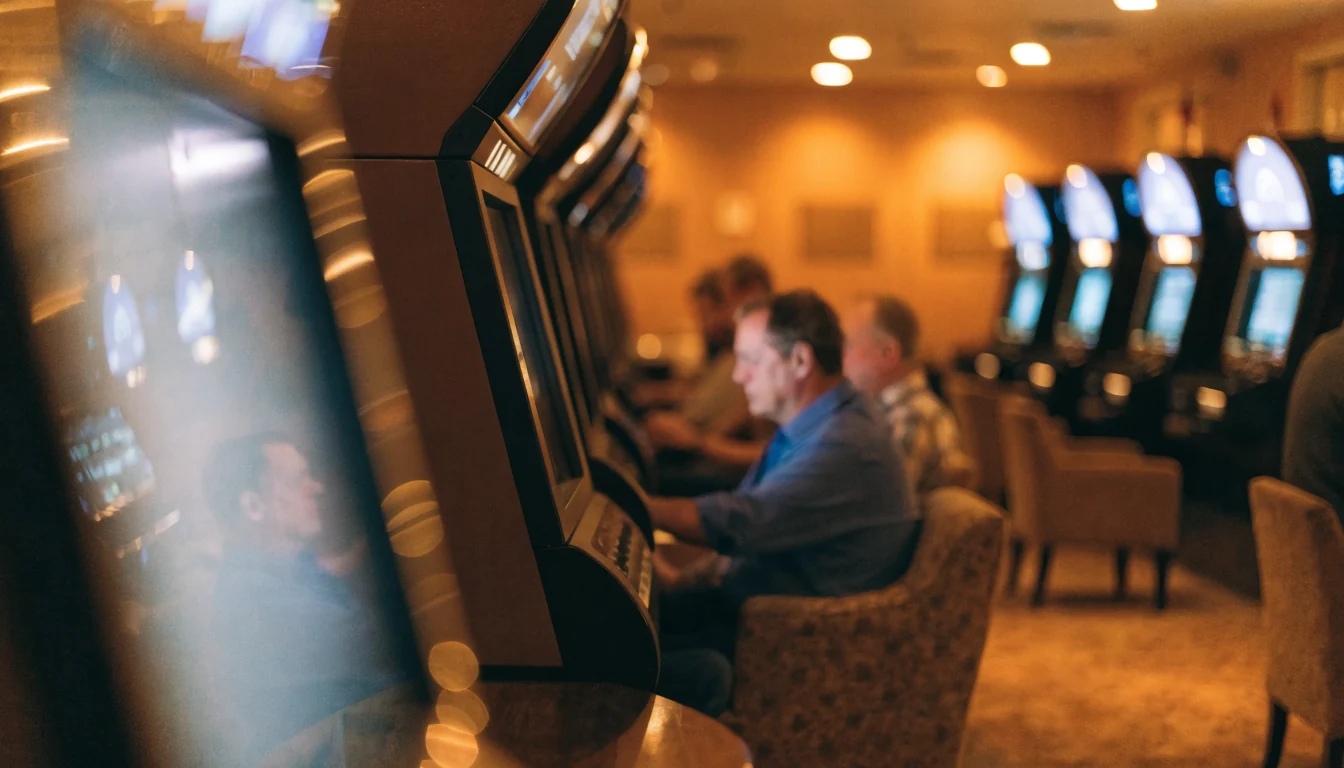
The next major shift was access rather than cabinet design. The first online casinos appeared in the late 1990s, allowing people to play pokies from home. Mobile technology then extended that access to handheld devices. A pokie no longer required a trip to a pub, club or gaming room; the playing environment moved into a browser or mobile interface.
That change also altered what needs examining before play. In a venue, the machine is a physical object within a familiar setting. Online pokies use server-based RNG systems, encrypted connections and server-side game logic that players cannot alter. Online casinos also use cryptographically secure RNGs, making each spin unpredictable and unalterable after the spin button is pressed.
The setting changed. The randomness did not.
For anyone comparing Australian pokies across eras, the useful distinction is between cultural continuity and technical change. The vocabulary, visual themes and entertainment appeal have roots in local venue culture. The delivery system has moved from mechanical cabinets to electromechanical machines, video screens and mobile software. “Australian pokies tips” therefore make most sense when they recognise that history without mistaking familiarity for control over outcomes.
Tips for Winning on the Pokies Without Treating Gambling as Income
“Winning” is a useful word only when its limits are clear. A favourable spin can produce a payout, but that result is not evidence of a repeatable method or a dependable source of money. Pokies use a random number generator (RNG), so each spin is random and previous outcomes do not determine what happens next. My practical conclusion is blunt: a win is an event, not an income strategy.
Financial Risk Never use money intended for essential expenses like rent, bills, or food for gambling sessions.
Define the money before play
The first safeguard is a gambling budget decided before the session begins. It should come from money left after rent, bills, food and other essential expenses have been covered. Gambling with money needed for daily life changes the decision immediately: a losing spin is no longer entertainment spending, but a threat to something important.
A budget is useful only if it is fixed. Adding funds after losses turns the original limit into a suggestion. The same applies to chasing a target after an early win. A win limit can close the session while the result is favourable; a loss limit prevents frustration from becoming a larger financial decision.
A simple internal rule is stronger than a complicated system:
- Set the session budget in advance.
- Keep essential money completely separate.
- Set a win limit and a loss limit.
- Stop when either limit is reached.
- Do not reload to recover a loss.
That is not a way to force a win. It is a way to stop one result from controlling the next decision.
Treat exposure as the risk
Volatility describes a pokie’s risk level and payout frequency. A high-volatility game may offer larger payouts while producing longer periods without a significant win. That profile can make a budget disappear before a notable payout appears. A lower-risk presentation does not remove randomness, either; it only describes how the game’s outcomes are distributed.
RTP also needs a careful reading. A 90% RTP does not mean that wagering $300 guarantees receiving $270 back. RTP is not a personal refund promise for a session, and it cannot convert gambling into planned cash flow. The displayed information can describe the game, but it cannot predict the next spin.
This is where many “tips for winning at the pokies” become misleading. Betting more after losses, changing machines because one has been quiet, or increasing stakes after a win may feel decisive, but none changes the RNG. There is no “due” win and no “hot” machine created by recent performance.
Keep the meaning of entertainment intact
Gambling works as entertainment when the cost is accepted before play and the outcome is allowed to remain uncertain. It stops working that way when winnings are expected to pay bills, repair a budget shortfall or solve debt. That pressure encourages longer sessions and larger deposits—the exact behaviour a fixed limit is meant to prevent.
I have seen the language change first: “just one more spin” becomes “winning it back”. That is the point to stop, not a signal to continue. No technique can guarantee a repeatable profit from random spins. The honest version of tips for winning on the pokies is therefore narrower: protect essential money, cap exposure, accept losses as possible, and treat any payout as entertainment luck rather than earnings.
Session Readiness
- Is my entertainment budget strictly set aside?
- Have I defined my maximum loss limit?
- Have I defined my win limit to end the session?
- Do I understand how the bonus features and scatters work?
Tips on Playing Dragon Link Pokies
Dragon Link is best approached as a feature-led pokie, not as a machine that can be read from its recent results. Its appeal is built around symbols, scatters and bonus-round presentation, so the first useful step is to understand what the game displays before staking cash.
Check the feature rules first
Scatter symbols can appear anywhere on the reels. Their role may extend beyond an ordinary winning combination: scatters can unlock special features or trigger bonus rounds. The paytable and help screen should explain which symbols qualify, how the feature is activated and whether any conditions apply.
That information matters because a bright bonus display can make a feature look simpler than it is. The wording is the operating detail. If the game separates ordinary wins from scatter-triggered features, both sections should be read rather than relying on the animation to explain the result.
A practical inspection covers:
- the symbols identified as scatters;
- where those symbols may appear;
- the conditions for opening a bonus round;
- the rules shown for any special feature;
- the stake and paytable information displayed by the game.
The point is not to identify a “hot” Dragon Link machine. There is no such reading to make. The RNG determines each spin, and previous outcomes do not establish what the next spin will produce.
Use demo play as a mechanics check
Some pokies can be trialled in demo mode before cash is staked. Where Dragon Link is offered that way, demo play is useful for learning the interface and locating the rules, not for proving that a bonus is approaching. A run of results in demo mode cannot forecast cash play.
I have found that the most valuable demo exercise is deliberately unexciting: open the information panels, follow the scatter explanation, inspect the bonus presentation and note how the game records wins. That removes uncertainty about the controls without turning observed results into a prediction.
Keep expectations separate from the feature
A bonus round can make a game more engaging, but it does not change the random nature of individual spins. The feature is a reason to understand the game; it is not evidence of a repeatable advantage. Once the rules are clear, the sensible decision is whether the game’s presentation suits the intended entertainment, rather than whether recent play makes it “due”.
The machine shows the feature. The RNG decides the outcome.
Online Pokies Tips for Fun Play
Online play changes the practical conditions around pokies, but it does not change the random nature of a spin. The useful checks concern access, payment rules, software integrity and bonus terms—not finding a technical shortcut to a better result.
Account access comes first
A profile from a specialist review states that players must register a casino account even when a site advertises no-registration pokies. That distinction matters: “no registration” can describe the initial game access, not the ability to withdraw funds without an account.
Account terms should be read before depositing. They can explain identity checks, accepted payment methods, withdrawal conditions and the treatment of promotional funds. The wording is part of the product. A bright bonus panel may show the benefit first and leave the restrictive clause in the terms.
Check the legal position
Australian residents have no domestically licensed real-money online casino for pokies. Online casino games are prohibited interactive gambling services when offered to an Australian customer, although the Interactive Gambling Act targets providers rather than players. This makes promotional claims about “Australian casino licensing” especially important to question. There is no Australian casino licence for this product.

An offshore platform may refer to licensing from another jurisdiction, but that is not an Australian licence. The licence claim, ownership details and complaint process should be treated as separate checks rather than as proof that every condition is favourable.
Treat payments as conditions, not promises
A specialist review reports that Visa and bank-transfer withdrawals take between two and five working days. That is a statement about the service described by that source, not a universal market deadline. Processing can also depend on verification, payment terms and whether promotional funds are involved.
Bonus language deserves the same care. One specialist review describes a matching deposit bonus requiring wagering of 35 times the bonus amount and 35 times slot-play wins accrued from it. Such a condition can materially change the cost of accepting an offer. The bonus is not cash simply because it appears in the balance. The terms decide when it becomes withdrawable.
Understanding Bonus Terms Some promotional offers, such as matching deposit bonuses, come with specific requirements like wagering amounts (e.g., 35x the bonus and wins) before funds can be withdrawn.
Keep the technology in perspective
Online pokies use server-based RNG systems, encrypted connections and server-side game logic that players cannot alter. Cryptographically secure RNGs make each spin unpredictable and unalterable after the spin button is pressed. Secure systems protect the transaction and game process; they do not turn a random result into a predictable one.
The cleanest approach is narrow: understand the account, read the terms, record withdrawal conditions and treat play as entertainment. Then stop.
Dragon Link Pokies: The Best Tips Are About Features, Not Timing
The best approach to Dragon Link pokies is to inspect the feature structure before considering a cash stake. Timing is not a feature. Each spin is generated independently by an RNG, so a recent sequence cannot make the next result more likely. A machine showing repeated small wins is not “warming up”, and one that has been quiet is not “due”.
Read Volatility as a Playing Condition
Volatility describes both risk and payout frequency. It is less a promise about results than a warning about how uneven the experience may feel.

A high-volatility pokie can offer larger payouts, but it may also produce longer periods without a significant win. That matters when assessing Dragon Link’s presentation: a prominent jackpot display or an attractive bonus theme does not remove the underlying risk. The feature can be appealing while the sessions between meaningful wins remain difficult to tolerate.
The practical question is not whether recent spins look favourable. It is whether the game’s volatility is compatible with the planned entertainment budget and the willingness to experience losing sequences. If the answer is no, changing the timing of play will not solve the mismatch.
Examine the Bonus Presentation
Dragon Link is best considered through its visible features rather than through claims about a “hot” cabinet. The paytable and game information should clarify how symbols, scatters and bonus elements work. Scatter symbols can appear anywhere and may unlock special features or bonus rounds, but their appearance on earlier spins does not signal that another feature is approaching.
A useful pre-play check is straightforward:
- identify the stated volatility;
- read how the bonus feature is triggered;
- note whether scatter symbols have a defined role;
- understand the displayed stake and paytable information;
- decide whether the game remains acceptable without relying on a bonus result.
That last point is where promotional language often leaves something unsaid. A bonus feature can make the game more engaging, but it cannot turn random outcomes into a schedule.
Ignore Timing Claims
“Due” and “hot” are descriptions of recent history, not properties of the next spin. RNG outcomes do not remember whether the previous result was a loss, a bonus, or a large payout. The cleanest Dragon Link tip is therefore unglamorous: choose based on features and volatility, then treat every spin as a separate event.
No timing system can alter that mechanism.
5 Dragons Pokies Tips for Reading the Game Before Playing
A sensible approach to 5 Dragons starts before the first paid spin. The game’s presentation may suggest a theme or bonus atmosphere, but neither changes the underlying uncertainty. Pokies use a random number generator (RNG), so every spin is random and previous results do not determine what happens next.
Check the information panel first
The paytable and help screen are the working documents for the game. They should be read before staking cash, not after an unfamiliar symbol or feature appears. Check which symbols form winning combinations, how wins are displayed, and whether the game explains any special symbols or bonus functions.
RNG An automated system that generates a random number for each spin, ensuring that every outcome is independent and unpredictable.
This is not about finding a secret pattern. It is about removing avoidable confusion. If the rules are unclear, the decision to play is unclear as well.
Treat volatility as a risk description
Volatility describes the risk level and payout frequency of a pokie. It is not a forecast for the next spin and does not identify a machine that is “ready” to pay. A higher-volatility game may offer larger payouts while also producing longer periods without a significant win.
That distinction matters with 5 Dragons. The label should be read as information about the shape of possible results, not as a promise of a particular result. Past spins remain irrelevant.
No machine is due.
Use demo mode as a reading tool
Some games can be trialled in demo mode before cash is staked. Where that option is available for 5 Dragons, it can help establish how the reels, paytable, win display and any stated features are presented. Demo play is useful for learning the interface and rules.
It does not prove that cash play will produce similar results. The RNG still makes each spin independent, and a sequence seen in demo mode cannot be carried across as a prediction.
Make a pre-play checklist
Before moving from inspection to paid play, confirm:
- the paytable and game instructions are understandable;
- the volatility information, where supplied, has been noted;
- the available features are described clearly;
- demo play has answered interface questions;
- the decision is based on the game’s stated information, not recent outcomes.
The practical value of these 5 Dragons pokies tips is restraint. A familiar screen can make a game feel knowable; its random results are not. Examine the rules, understand the risk language, and leave unsupported timing theories outside the decision.
Practical Tips for AU Pokies and Safer Online Play
For Australian players, the first check is legal rather than promotional. Online casino pokies are prohibited interactive gambling services when offered to Australian customers, and no Australian gambling licence exists for casino games. Sports betting and lotteries operate under different licensing arrangements. That distinction matters: a site displaying an overseas licence is not the same as a locally licensed online casino.
A practical account checklist
If an offshore platform is being considered, its terms deserve more attention than its banner. A licence number should be checked against the relevant regulator’s official register; Malta and Curaçao authorities maintain public registers for this purpose. The register does not turn prohibited online casino play into an Australian-licensed product, but it can help establish whether the stated overseas licence exists.
Account conditions should be read before any deposit. A casino account is required even where a promotional page describes “no-registration pokies”, according to one specialist industry review. That wording is therefore not a promise of anonymous play. It describes a marketing label, not an exemption from account procedures.
Bonuses require the same discipline. One specialist industry review reports that some cashback offers carry no wagering requirement, but that condition belongs to the specific offer and its terms. It should not be inferred from the word “cashback” alone. Other promotions can attach playthrough rules, expiry provisions, eligible-game restrictions or withdrawal conditions.
Payments and software integrity
Withdrawal information should be treated as an operating condition, not a sales slogan. A specialist industry review states that Visa and bank-transfer withdrawals take between two and five working days. The applicable method, verification status and bonus conditions still need to be checked in the operator’s own terms.
Software integrity is another hard boundary. Online pokies use server-based RNG systems, encrypted connections and server-side game logic that players cannot alter. Tampering is not a clever shortcut: an operator may detect it and deny a payout. A software glitch can also lead to refused payouts, including amounts connected with other affected players.
The final limit
Set a budget before play and keep essential money outside it. Rent, bills and food are not a gambling bankroll. A session should not risk more than 10% of the bankroll, with a win limit and a loss limit recorded in advance. Alcohol has no place beside the controls.
No account condition changes random outcomes. No recent result makes a pokie “due”. Gambling remains entertainment, never an income plan or a solution to financial problems.
Written by the editors at Online Betting Australia.