
Safe Online Pokies Australia: What Safety Means
 Available in US
Separate fair game mechanics, secure payments and player protections from the legal status of online pokies.

Table of Contents
- What “Safe Online Pokies” Means in Australia in 2026
- The Australian Pokies Landscape: Clubs, Hotels and Casinos
- How to Judge Secure Payments When PayID Is Involved
- Free Demo Spins: A Safer Way to Explore Pokies
- Why PayID Does Not Make Online Pokies Legal
- Online Casino Safety Claims Versus Australian Law
- What Makes a Pokie “Best” in the Australian Market
- Choosing Among Safer Pokie Features
- Payment Safety Without Promoting Online Gambling
- What “Safe AU Pokies” Can Legally Refer To
What “Safe Online Pokies” Means in Australia in 2026
“Safe” is a precise word when it is separated from advertising language. It does not mean a pokie will produce a profit, that a website will approve every withdrawal, or that a polished interface removes gambling risk. Safety has several distinct parts: fair game mechanics, transparent randomness, protection against harmful play, and a lawful service environment.
The first distinction matters most in Australia. Real-money online casinos offering pokies to Australians are prohibited under the Interactive Gambling Act 2001. No Australian licence exists for a domestic online casino offering that product. As a result, a website may describe itself as a “safe online pokies casino”, but the label cannot make the service lawful for Australians.
Safety and legality are related, but they are not the same test.
What fair game mechanics involve
A pokie should use a genuine random number generator, or RNG, to determine outcomes. Each spin is independent. The previous result has no bearing on the next one, whether the last spin was a win, a loss, or part of a long sequence without a notable payout.
This list highlights online pokies operators with specific licensing, bonus, deposit, or payment details available for review. Use the stated facts to assess which options may fit your preferences for safer online play in Australia in 2026.
License: Curacao eGaming Licence · Min. deposit: A$10 Royal Reels is listed with a Curacao eGaming Licence and supports a minimum deposit of A$10.
License: Curacao eGaming Licence · Min. deposit: A$10 Fair Go Casino is listed with a Curacao eGaming Licence and has a minimum deposit of A$10.
License: Curacao Gaming Control Board OGL/2023/176/0095 (Hollycorn N.V.) · Bonus: up to A$11,000 + 300 free spins (code NEO100) Neospin holds a Curacao Gaming Control Board licence identified as OGL/2023/176/0095 for Hollycorn N.V. Its offer is up to A$11,000 plus 300 free spins with code NEO100.
Bonus: 240% up to A$4,100 + 300 free spins WinShark is notable for a 240% bonus up to A$4,100, accompanied by 300 free spins.
License: Curacao Gaming Control Board · Bonus: up to A$5,000 + 400 free spins JustCasino is listed with a Curacao Gaming Control Board licence and offers up to A$5,000 plus 400 free spins.
License: Curacao – Antillephone N.V. (Versus Odds B.V.) · Bonus: up to EUR 2,000 across 5 deposits + 200 free spins · Min. deposit: EUR 20 Thor Casino is licensed in Curacao by Antillephone N.V. for Versus Odds B.V. Its offer includes up to EUR 2,000 across 5 deposits and 200 free spins, with a minimum deposit of EUR 20.
License: Curacao eGaming (Roby Games Ltd) · Bonus: 100% up to A$750 + 200 free spins Roby Casino is associated with a Curacao eGaming licence for Roby Games Ltd. The stated offer is 100% up to A$750 plus 200 free spins.
License: international iGaming licence – jurisdiction not named in the source · Bonus: 100% up to A$1,000 + 100 free spins, 35x wagering · Payout speed: PayID 1-24 hours · Min. deposit: A$30 (PayID from A$10) House of Pokies lists an international iGaming licence, although the jurisdiction is not named in the source. It offers 100% up to A$1,000 plus 100 free spins with 35x wagering, while PayID payouts are stated as taking 1–24 hours; the minimum deposit is A$30, or A$10 via PayID.
License: Curacao · Bonus: 100% up to A$500 + 200 free spins, 10x wagering · Payout speed: crypto 30-60 minutes, fiat 1-5 days · Min. deposit: A$10 Wild Tokyo is listed with a Curacao licence and offers 100% up to A$500 plus 200 free spins with 10x wagering. Stated payout times are 30–60 minutes for crypto and 1–5 days for fiat, with a minimum deposit of A$10.
Bonus: up to A$6,600 + up to 250 free spins across 4 deposits DragonSlots Casino offers up to A$6,600 plus up to 250 free spins across 4 deposits.
That independence removes several familiar but misleading ideas. A machine is not “due” to pay after a losing run. It does not become less likely to pay because many other people are playing. It does not become more generous because a player has already lost money. The RNG operates independently of time, player traffic, and other external factors.
The display can still create impressions. Near misses, animated symbols, sound effects, and changing meters are presentation features, not evidence that a particular result is approaching. From behind the counter, this was one of the clearest differences between the machine’s mathematics and the way a session felt. The screen tells a story. The RNG determines the outcome.
Those are different things.
Why RTP is not a session promise
RTP, or Return to Player, is a long-run statistical figure. It describes the expected proportion returned across a very large number of spins under the game’s stated conditions. It does not predict the result of one session.
A short session can finish substantially above or below the published RTP. That is not automatically evidence that the game is malfunctioning. Random results naturally vary, and the published figure does not promise a particular return on a particular day.
This is where “safe pokies” claims often become vague. A reference to RTP may sound like a guarantee, but it is not one. RTP is useful for understanding the game’s long-run design; it is not a forecast of a player’s balance after a limited number of spins. A high figure cannot convert a prohibited online service into a lawful one, either.
Randomness must be independently checked
On a properly regulated platform, the RNG is not meant to be accepted solely because the operator says it is fair. Licensed Australian-facing online platforms are required to use independently audited RNGs. Independent testing matters because it places the claim outside the operator’s own advertising.
That safeguard should not be confused with an Australian casino licence for online pokies. Such a licence does not exist. The point is narrower: where a licensed platform is permitted to offer a gambling product, independently audited randomness is part of the technical safety framework. It does not authorise a product that Australian law prohibits.
For an Australian assessing a real-money online pokie, this creates an uncomfortable but important boundary. A foreign testing certificate, a foreign licence, or a statement that the RNG has been audited may describe a technical feature of the service. None of those facts grants permission to provide online casino games to Australian customers.
Player protection is part of safety
Game integrity is only one side of the issue. Player protection concerns the conditions around gambling: whether the service communicates clearly, supports limits and self-exclusion, handles personal information responsibly, and avoids pressure-driven promotions.
Advertising language tends to compress all of this into one word: “trusted”, “secure”, or “safe”. Those labels are conclusions, not evidence. A careful assessment separates the claims. Is the game’s randomness independently tested? Is the RTP explained as a long-run measure rather than a promise? Are the rules and costs visible? Are protective tools meaningful rather than decorative?
The absence of a clear answer is itself relevant. A professional-looking site can still leave the important conditions buried in promotional copy. In my experience, the wording around a product often revealed more than the badge displayed beside it. A claim that sounds broad may be avoiding a narrower question.
Read the condition.
The Australian legal line
For Australians, the legal status of the service must be checked before the technical features are considered. Online casino games such as pokies, roulette, blackjack, and live dealer tables are prohibited interactive gambling services when offered to an Australian customer. The Interactive Gambling Act targets providers rather than players, so an Australian does not commit a crime merely by placing bets at an offshore site. That does not make the service authorised, protected, or equivalent to a locally licensed product.
The Australian Communications and Media Authority, or ACMA, enforces restrictions. A profiled industry overview describes ACMA’s role as including blocking shady sites and warning influencers about dodgy promotions. The practical point is that access, branding, and payment availability should not be mistaken for approval.
Lawful gambling options for Australians include land-based casinos, licensed bookmakers, and lotteries. Online sports betting is a separate regulated category from online casino games. That distinction prevents a common mistake: assuming that because some online wagering is licensed, online pokies must have a comparable Australian licence.
They do not.
So, are online pokies safe? The honest answer cannot be reduced to a green badge or a list of technical features. Fair randomness, long-run RTP information, independent auditing, and genuine player-protection measures describe aspects of safety. They do not remove the financial risk of gambling, guarantee a session result, or override the prohibition on real-money online pokies for Australians. In Australia in 2026, “safe online pokies” is therefore a question about mechanics and protection only after the legal status has been made clear.
The Australian Pokies Landscape: Clubs, Hotels and Casinos
For Australians looking for a regulated place to encounter gaming machines, the relevant market is physical rather than online. Pokies are found in licensed clubs, hotels and casinos, with the balance between those venues determined by state and territory law. That distinction matters because a machine on a venue floor is subject to local operating rules, venue licensing and jurisdiction-specific limits. A familiar venue name is not, by itself, a guarantee of a particular game outcome. It does show where the regulated land-based market sits.
The figures below come from a specialist market review, so they should be read as a reported snapshot rather than a permanent national register. The distribution is uneven. New South Wales has the largest reported machine presence, while the Australian Capital Territory places its machines in clubs and hotels rather than Casino Canberra.
New South Wales: a club-and-hotel-centred market
The same specialist market review reports 100,500 gaming machines in New South Wales. Of these, 99,000 are in clubs and hotels, while 1,500 are at Star Casino in Sydney. The numbers explain why the Australian experience cannot be understood by looking only at casinos. In this state, community clubs and hotel venues form the dominant part of the physical pokies market.
The venue changes the surrounding environment. A club may combine gaming areas with dining, sport or community facilities; a hotel may operate pokies alongside hospitality services; a casino is a more concentrated gambling venue. The machine remains a gambling product in each setting, but the rules governing the premises and the available products are not necessarily identical.
99,000 machines in clubs and hotels, 1,500 at Star Casino.
47,811 total machines, mostly in clubs and hotels.
30,000 machines, with 27,500 in clubs and hotels.
13,113 machines, predominantly in clubs and hotels.
The review also reports a $10 maximum bet per spin in New South Wales clubs and hotels. It records win limits of $10,000 or $500,000 inter-venue. Those figures are venue-market rules, not predictions about what a machine will return. A limit controls the permitted structure of play; it does not turn a losing session into a safe one.
Queensland: a large listed inventory
Queensland’s reported total is 47,811 listed gaming machines. The specialist market review assigns 44,015 to clubs and hotels and 3,796 to casinos. It also states that there is no cap on casino machine numbers.
For clubs and hotels, the review gives a $5 maximum bet per spin, a minimum RTP range of 85%–92%, and a maximum of 50 lines. It also reports a minimum three-second interval between game start and finish. These details show how regulation can reach into the design of the play experience: stake size, game speed, available lines and statistical return are treated as separate matters.
RTP remains a long-run figure. It does not promise that a particular session will approach the stated percentage. The rule about elapsed time likewise changes the pace of play, not the independent outcome of each spin.
Victoria: clubs and hotels versus the casino
Victoria has 30,000 gaming machines, according to the same specialist market review. 27,500 are reported in clubs and hotels, with 2,500 at Crown Melbourne. The division is substantial: most machines sit outside the casino environment.
The review states that clubs and hotels have a $5 maximum bet and a minimum RTP of 87%, while casinos have no maximum bet. That contrast is a useful reminder that “safe” cannot be reduced to the presence of a machine in a regulated building. The applicable controls may change with the venue category, and a casino’s absence of a maximum bet under the reported rule does not remove the financial risk of gambling.

South Australia and Tasmania
South Australia has 13,113 gaming machines, including 12,118 in clubs and hotels and 995 at Adelaide Casino, as reported by the specialist market review. It also records that South Australian machines accept coins only because note acceptors are banned. The reported controls include a 3.5-second minimum spin rate, a $10 maximum bet per spin and an 87.5% minimum RTP.
Tasmania has 3,680 gaming machines in hotels, clubs and two casinos: Wrest Point and Country Club. The review reports a three-second minimum spin rate, a $5 maximum bet per spin and a maximum of 30 lines. These are practical differences that a player notices on the floor: how quickly a new game can begin, how much can be staked and how many lines can be selected.
Smaller territories, different structures
The Australian Capital Territory has 5,200 gaming machines located in clubs and hotels, with no gaming machines at Casino Canberra, according to the specialist market review. The territory therefore presents a particularly clear example of a club-and-hotel model rather than a casino-based one.
The same review reports 2,195 gaming machines in the Northern Territory, located in clubs, hotels and two casinos: Sky City and Lasseters. The reported rules differ by venue. Clubs and hotels have a $5 maximum bet per spin and an 85% minimum RTP, while casinos have no maximum bet and an 88% minimum RTP.
The lesson from the physical market is structural, not promotional. Venue type and jurisdiction determine the controls that apply. Clubs, hotels and casinos are not interchangeable settings, and a machine’s location can affect limits, speed and published statistical parameters. That is the useful meaning of a safer Australian pokies environment: a regulated land-based setting with identifiable venue rules, not a promise that any session will produce a favourable result.
How to Judge Secure Payments When PayID Is Involved
PayID is a payment rail, not a gambling licence. It connects a payment account to an identifier such as a mobile number or email address, allowing a bank transfer through the New Payments Platform. That distinction matters when the surrounding service is described as offering “safe and secure online pokies”. A familiar banking method can reduce certain transaction risks, but it cannot authorise the product being paid for.
The first check is therefore not whether a payment page displays a PayID logo. It is whether the underlying gambling service may lawfully provide real-money pokies to Australians. Under the Interactive Gambling Act 2001, online casinos offering real-money pokies to Australians are banned. A payment instruction does not change that position. Nor does the appearance of a local currency balance, Australian-themed branding, or an apparently professional cashier.
What PayID can and cannot establish
PayID can indicate that a transfer is being routed through an established banking infrastructure. It does not establish that the recipient is an Australian-licensed casino, that the account belongs to the advertised business, or that the gambling service is authorised for Australian customers.
This is where payment language can become deliberately slippery. “Instant bank transfer” describes a route for moving money. It says nothing about the legal status of the merchant. Likewise, a reference to secure banking may concern encryption or account authentication while leaving the central question untouched: what service is receiving the funds?
I have seen transaction arrangements judged by their surface appearance because the payment screen looked more familiar than the operator behind it. That reverses the order of scrutiny. The payment rail is only one part of the arrangement. The recipient, the product, and the legal permission must be assessed separately.
A payment rail is not permission.
Before authorising a PayID transfer, the bank’s displayed recipient name should be checked against the business identity shown in the payment instructions. A mismatch is a clear warning sign. A match, however, is not proof that online pokies are lawful. It only reduces the risk of sending money to an unintended recipient.
Other payment arrangements
The same principle applies to cards, bank transfers, e-wallets, and other payment methods. Each may have its own authentication, dispute, and fraud controls. None converts a prohibited interactive gambling service into a permitted one.
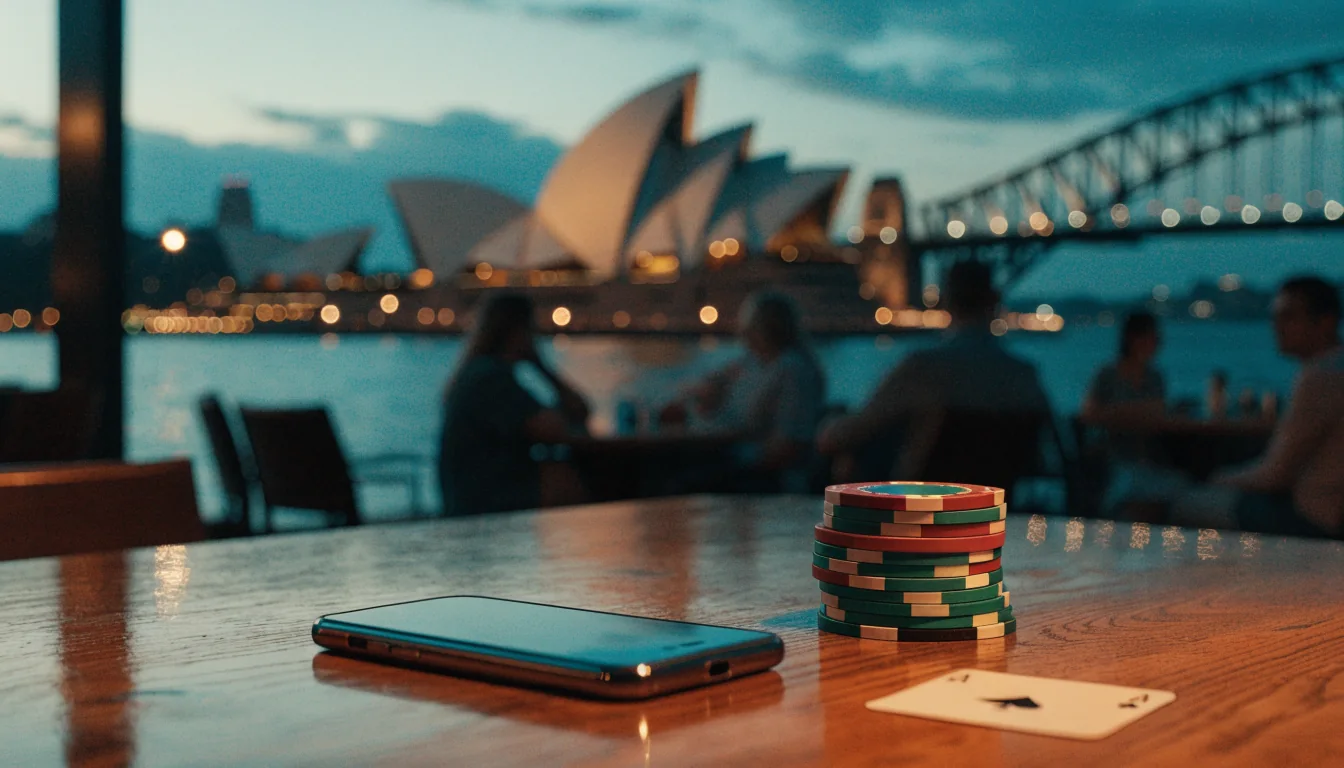
Payment safety also depends on avoiding unnecessary disclosure. A provider requesting excessive personal or banking information creates a separate privacy concern. The presence of verification procedures should not be mistaken for regulatory approval; an offshore service can request identity documents without holding an Australian casino licence, because no domestically licensed real-money online casino exists for Australian players.
The legal and practical risks can also run in different directions. The Interactive Gambling Act targets the provider rather than the player, so Australians are not committing a crime merely by placing bets at offshore sites. That does not make the transaction protected, recoverable, or suitable. An account may still be exposed to disputes over withdrawals, identity checks, account closure, or misuse of personal information.
A profile-style industry review may describe ACMA enforcement as including the blocking of shady sites and warnings to influencers about dodgy promotions. That enforcement context explains why payment branding should not be treated as a guarantee of continuity. A site can present a polished cashier while remaining outside the Australian legal framework.
The sensible assessment is therefore layered: confirm what PayID does, verify the recipient before any transfer, distinguish banking security from gambling authorisation, and remember that an online casino cannot lawfully offer real-money pokies to Australians simply because it accepts a recognised payment method. PayID may make a transfer familiar. It does not make the destination legitimate.
Free Demo Spins: A Safer Way to Explore Pokies
Demo spins are useful for one limited purpose: learning how a pokie behaves on screen before money is involved. The reels, symbols, paylines, bonus buttons, win displays and sound effects can be explored without turning unfamiliar controls into a financial decision. That makes free play a safer way to investigate the entertainment side of pokies, including the kind of casual experience sometimes described as safe, fun free pokies.

The value is practical rather than predictive. A demo session can show where the spin control sits, how the stake setting is changed, what a feature round looks like and whether the interface is clear enough to follow. It can also reveal how quickly the display moves and whether the amount selected is easy to misread. Those details matter because confusion at the interface level is separate from the mathematics of the game.
Free play does not make a pokie safer in every sense. It does not change the game’s design, create a better outcome, or demonstrate that real-money play will produce a similar session. Each spin remains independent, so a sequence seen in demo mode cannot establish what the next spin would do. Familiarity is the benefit; prediction is not.
RTP also needs to be kept in its proper place. It is a long-run statistical figure, not a promise about a short session. A demo run can finish with frequent wins or no apparent return without proving anything about future play. The same principle applies when comparing the impression created by animations with the underlying chance mechanics.
Demo access must also be separated from legal status. A free version being visible to an Australian user does not mean that real-money online pokies are authorised for Australians. Under the Interactive Gambling Act 2001, online casinos offering real-money pokies to Australians are banned. Free access is not a licence, and a familiar interface is not evidence of a lawful gambling service.
From behind the counter, this distinction was always straightforward: showing a machine is not the same as accepting a wager. Demo play can answer questions about operation and presentation. It cannot answer whether staking money online is permitted, protected or available through a locally licensed casino.
Explore the interface, not the promise.
Why PayID Does Not Make Online Pokies Legal
PayID is a payment method, not a gambling licence. Its presence on a cashier page says how money may be transferred; it does not establish that the service is authorised to offer casino games in Australia. That distinction is easy to miss because a familiar Australian payment name can make an offshore website appear local, accountable and established.
- Verify the recipient name against the business identity
- Use PayID to route transfers through established banking infrastructure
- Check if the service is actually authorised for Australians
- Assume a PayID logo equals a gambling licence
- Mistake a familiar payment method for legal permission
- Treat local currency or branding as regulatory approval
The legal question comes first. Under the Interactive Gambling Act 2001, online casinos offering real-money pokies to Australians are banned. A site does not become lawful because it accepts PayID, displays Australian currency, or uses an interface designed for local customers. The payment rail and the gambling product remain separate issues.
A payment channel is not permission.
PayID is connected with Australia’s banking infrastructure, but that connection does not extend Australian gambling authorisation to the merchant receiving a transfer. A transaction can be technically processed while the underlying service remains prohibited. From the operational side, this is the point promotional pages tend to leave unstated: payment convenience describes the movement of funds, not the legal status of the business.
The word “safe” also needs careful handling. It may refer to encrypted data, account controls or a recognisable payment process. None of those descriptions proves that real-money online pokies may legally be supplied to Australian customers. Nor does a foreign licence change that position. The relevant restriction concerns the service offered into Australia, not merely the country in which the operator is incorporated.
The enforcement position matters as well. A regulatory review source describes the Australian Communications and Media Authority (ACMA) as enforcing restrictions by blocking shady sites and warning influencers against dodgy promotions. That makes promotional language part of the risk picture. Claims such as “secure PayID pokies” can present a payment feature as if it were evidence of lawful access, when it is only a method of transferring money.
This does not mean every form of gambling is prohibited. Australians can legally use land-based casinos, licensed bookmakers and lotteries, subject to the rules applying to those products and venues. Online sports betting is a different regulated category from online casino games. Treating them as interchangeable is another way payment-led advertising obscures the legal boundary.

The practical test is therefore straightforward: identify the product before assessing its payment method. If it is a real-money online casino offering pokies to Australian customers, PayID does not cure the prohibition. Familiar branding, quick banking instructions and polished compliance language cannot turn a banned service into a locally licensed one.
Online Casino Safety Claims Versus Australian Law
A label such as “safe online pokies casino” describes a marketing position, not an Australian legal status. The wording may suggest trustworthy software, responsible conduct, or secure account handling. None of those suggestions changes whether the service is allowed to provide real-money pokies to people in Australia.
Under the Interactive Gambling Act 2001, online casinos offering real-money pokies to Australians are banned. The restriction applies to the service being offered, rather than to the adjectives used to describe it. Calling a platform “secure”, “trusted”, or “safe for Australian players” does not create a local casino licence, and it does not turn a prohibited interactive gambling service into a permitted one.
That distinction matters because safety claims often move the discussion onto easier ground. A site may display information about privacy controls, account verification, responsible gambling tools, or technical safeguards. Those features can be relevant to general online risk, but they do not answer the prior legal question: may the service offer online casino games to Australian customers at all?
No domestic licence authorises a real-money online casino to provide pokies in Australia. The legal position is therefore different from that applying to licensed bookmakers and lotteries. Land-based casinos are also legal gambling options, but their existence does not extend permission to an online casino using the same game titles or branding.

A foreign licence does not repair the gap. An offshore operator may describe itself as licensed in another jurisdiction, yet that authorisation is not an Australian casino licence and does not permit the operator to serve Australian customers with prohibited online casino games. The label belongs to the provider’s overseas regulatory arrangement, not to Australian law.
ACMA is responsible for enforcing restrictions in this area. A regulatory industry overview describes measures including blocking shady sites and warning influencers about dodgy promotions. Enforcement can therefore affect access and promotion even when a website presents itself as established, compliant, or player-focused.
The practical test is straightforward: identify the product first, then its legal status. If the product is an online casino offering real-money pokies to Australians, a safety label cannot alter the result. “Safe” is not a substitute for lawful.
What Makes a Pokie “Best” in the Australian Market
“Best” is not a safety certification, a ranking, or a synonym for the largest advertised prize. From behind the counter, that label was often shorthand for a game that matched the player’s preferred pace and tolerance for uneven results. A sensible comparison starts with measurable mechanics, not promotional language.
The first measure is RTP, or Return to Player. It is a long-run statistical figure describing how a game behaves across a very large number of spins. It does not predict the result of an individual session. A short session can finish substantially above or below the published RTP, so treating the percentage as a promised return is a basic error.
The second measure is variance. It describes the distribution of returns rather than changing the independence of each spin.
- High-variance pokies tend to pay less frequently, with larger hit patterns when wins occur.
- Low-variance pokies tend to produce more frequent returns, but those returns are smaller.
Neither profile is automatically “best”. A high-variance game may suit a player who accepts long gaps between notable hits. A low-variance game may feel more controlled during a shorter session because returns arrive more regularly. That feeling is not a guarantee of profit; it is a description of the game’s statistical shape.
A third consideration is whether the mechanics are clearly disclosed. Paytable information, winning combinations, bonus features, and the stated RTP should be available before play. Vague claims such as “hot”, “due”, or “high-paying” explain little. The previous spin does not improve the next one, and a game does not become more likely to pay because it has been quiet.
One profile review describes Buffalo Power by Playson as a high-variance pokie with infrequent but larger hit patterns. That is a description from that particular review, not a universal classification that should be treated as an industry rule. It is useful only as an illustration of how variance language can frame expectations.
The word “best” therefore works better as a comparison question: is the RTP clearly stated, is the variance understood, and do the features suit the intended session? That approach removes the promotional gloss. It also avoids confusing a game’s mathematical characteristics with the separate legal status of any service offering online pokies to Australians.
Essential Summary
- PayID is a banking tool, not a legal authorisation for online pokies.
- High or low variance describes mathematical patterns, not profit guarantees.
- Safety in the Australian market is primarily found in regulated land-based venues.
- Always distinguish between technical security and legal compliance.
Choosing Among Safer Pokie Features
A cautious comparison starts with the way a pokie distributes returns, not with a promotional label such as “best” or “safe”. Variance describes the pattern of results across a session. It does not predict the next spin, and it does not turn a game into a profitable choice.
High variance and low variance
High-variance pokies pay less frequently, but their winning amounts can be larger when they occur. That pattern can produce a session with long stretches without a notable return, followed by a more substantial hit. It is a poor fit for anyone treating frequent small outcomes as a form of control.
Low-variance pokies pay more frequently, with smaller returns. The balance can feel steadier because the screen may show winning combinations more often, but frequency is not the same as value. The game still follows its own mathematical design, and individual results remain uncertain.
One practical comparison is between the size and spacing of outcomes:
- High variance: less frequent wins and larger hit patterns.
- Low variance: more frequent wins and smaller returns.
- Neither profile: a guarantee of a particular result or session outcome.
A profile review describes Dolphin Treasure by Aristocrat as a lower-variance pokie with steadier smaller returns across a session. That description identifies a reported feature of that title, not a universal market standard. It should not be converted into a promise that every session will feel even or that losses cannot occur.
What the machine is not doing
The RNG operates independently of time, player traffic and other external factors. A quiet venue, a busy venue, the length of a break, or the outcome of the previous spin does not make the next result due. Each spin remains a separate event.
That matters when comparing feature sets. A lower-variance design may create more frequent visible wins, but it does not remember earlier losses or adjust itself to produce a balancing result. A high-variance design is not “warming up” during a dry spell either.
From behind the counter, the useful distinction was always between a game’s structure and the story attached to it. Variance is a structural characteristic. Near misses, recent wins and a crowded screen are stories.
Look at the pattern, not the narrative.
Payment Safety Without Promoting Online Gambling
Payment security is useful, but it answers only one question: whether a transaction is handled safely. It does not answer whether the gambling service is authorised to accept Australian customers. Those are separate checks, and confusing them is how a familiar payment method becomes a misleading badge of trust.
A protected payment process can involve clear recipient details, secure bank authentication, and records that make a transaction traceable. None of those features turns an online pokie service into a lawful Australian casino. The Interactive Gambling Act 2001 bans online casinos offering real-money pokies to Australians. A payment screen cannot change that status.
That distinction matters because “safe” is often used as a commercial shortcut. The word may describe encryption, identity checks, or a dispute process while leaving the legal position unstated. It may also create the impression that a service is locally regulated simply because the payment page looks professional. From behind the counter, that was always the part worth separating: transaction control protects the movement of money; it does not authorise the product being sold.
The same principle applies to familiar banking tools. A payment rail is infrastructure, not a gambling licence. Its presence does not prove that the recipient is an Australian-licensed wagering provider, nor that the activity falls within a permitted category. Under Australian law, licensed bookmakers and lotteries occupy a different position from online casino games. Land-based casinos are also a legal gambling option, subject to the relevant local rules.
ACMA enforces restrictions on prohibited services. A profile-style industry review describes measures including blocking shady sites and warning influencers about dodgy promotions. That enforcement context is important, but it should not be mistaken for a player-facing approval system. A site remaining reachable, processing a payment, or displaying a foreign licence does not establish Australian authorisation.
A sensible payment-safety assessment therefore stays narrow:
- confirm who is receiving the money before authorising a transfer;
- avoid sharing banking credentials or security codes with a gambling website;
- keep transaction records and check account statements;
- treat pressure to pay, unclear recipient details, or unexplained charges as warning signs;
- separate payment security from the legality of online pokies.
The final point is the one promotional pages tend to omit. A secure transaction can still fund a service that is prohibited from offering real-money online pokies to Australians. Safe payment handling is risk control, not permission.
Different question. Different answer.
What “Safe AU Pokies” Can Legally Refer To
The phrase “safe AU pokies” needs a legal translation before it can be useful. In Australia, it can refer to gaming machines in approved land-based venues, not to a domestically licensed online casino. The distinction is not cosmetic. It determines which protections, operating rules and regulators apply.
The Interactive Gambling Act 2001 prohibits online casinos from offering real-money pokies to Australians. No Australian casino licence authorises that product online. A website may describe itself as “safe”, “Australian-friendly” or “licensed overseas”; those labels do not turn prohibited online casino games into a lawful local service.
That is the dividing line.
What the phrase can cover
In a lawful Australian context, the wording may point to three categories:
- Land-based casinos, where gaming machines operate within the rules of the relevant state or territory.
- Licensed bookmakers, which provide permitted wagering products such as sports and race betting.
- Lotteries, which are also licensed gambling products available under Australian regulation.
These categories should not be blended together. A bookmaker’s licence does not authorise online pokies, and a lottery licence does not create permission for casino games. Each product sits within its own regulatory framework.
The practical meaning of “safe” also changes by category. In a physical venue, it concerns the venue’s authorisation, visible operating conditions and the responsible-gambling measures attached to that jurisdiction. For a bookmaker or lottery, it concerns whether the product is offered by an operator holding the relevant local licence. None of those checks provides a route to legal online casino play.
The role of ACMA
ACMA enforces restrictions on prohibited online gambling services. A profiled industry review describes its activity as including action against shady sites and warnings about dodgy promotions. The regulator can also support restrictions that result in illegal offshore gambling websites being blocked.
That enforcement position matters because an offshore website is not an Australian casino simply because it accepts Australian customers, uses Australian currency or displays familiar payment branding. Foreign licensing may describe the operator’s position in another jurisdiction; it does not authorise service to Australians under Australian law.
Accordingly, a responsible interpretation of the phrase does not produce a list of offshore casino names. It identifies the permitted local alternatives: land-based gaming machines, licensed sports and race wagering, and lotteries. Online real-money pokies remain outside that list.
In short, “safe AU pokies” can describe a lawful Australian gambling setting only when “pokies” refers to regulated land-based machines. It cannot be used as shorthand for a legal Australian online casino.
Created by the ”Online Betting Australia” editorial team.